
The Current State of Care Technology as Seen by a Researcher Who Came to Japan from Switzerland to Study —— Care in Japan and Switzerland, and the Future Possibilities Opened Up by the Introduction of Robots
[Biography of Inna Barunina] Research Fellow at the University of Basel
, Switzerland; holds a Master’s degree in Business Administration and Economics. Her research focuses on labor shortages in the healthcare and long-term care sectors, as well as the adoption of new technologies in aging societies and long-term care facilities. She is conducting comparative research between Switzerland and Japan.She visited Japan to learn about pioneering initiatives in the adoption of care technology and toured three facilities: “Future Care Lab in Japan” (SOMPO Care Co., Ltd.), “Kashiwa Living Lab” (National Institute of Advanced Industrial Science and Technology: AIST), and “Care Tech Lab” (Zenko Comprehensive Research Institute Co., Ltd.).
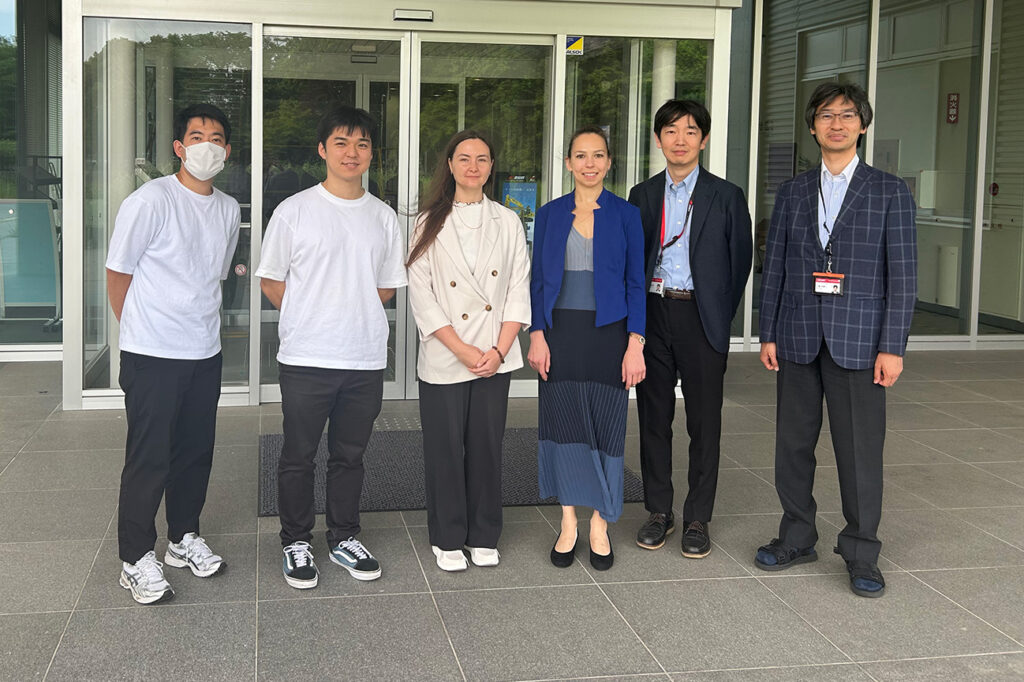
In Japan, where the population is declining and aging, the adoption of care technology in nursing care facilities and other settings has been promoted for many years. To learn from these efforts, Inna Barunina (hereinafter referred to as “Inna”), a researcher at the University of Basel in Switzerland, visited Japan and toured the Future Care Lab in Japan, the Kashiwa Living Lab, and the Care Tech Lab.Switzerland, too, faces the challenges of an aging population and a labor shortage, and Ms. Inna is exploring the ideal model for care facilities in an aging society by comparing Switzerland and Japan. In this article, Ms. Inna shares her candid impressions of the care situation in Switzerland and Japan’s initiatives, based on her visits to and discussions at the three facilities.
1. Differences in Long-Term Care Between Switzerland and Japan
―― First, could you tell us about your research and the purpose of your visit to Japan? I am a visiting
researcher at the University of Basel, and I am currently conducting research with Prof. Dr. Rolf Weder in the Department of Economics.This project is being carried out with the support of the Center for Innovation Basel. My research focuses on labor shortages in the healthcare and long-term care sectors, and how robots and assistive technologies can replace or supplement human labor in response to these shortages.Specifically, I have conducted field experiments at Swiss long-term care facilities to analyze work processes, staffing levels, the workload of care staff, and the potential for automation. I am currently working on a working paper that compares the long-term care systems in Japan and Switzerland and estimates the pace of progress in labor productivity and technological innovation in both countries.
The purpose of our visit to Japan was to learn from Japan’s successful practices in addressing the challenges of an aging population and a shortage of long-term care workers that Switzerland is currently facing. Japan began its national initiative on care technology around 2012–2013 and has accumulated over a decade of experience and proven results.During this visit, we toured three locations: Future Care Lab in Japan (SOMPO Care Co., Ltd.), Kashiwa Living Lab (AIST), and Care Tech Lab (Zenko Research Institute). The primary objective of this visit is to apply the insights and best practices gained in Japan to long-term care facilities in Switzerland.
―― Please tell us about the current state and challenges of long-term care in Switzerland.
Switzerland is facing a severe shortage of long-term care staff amid an aging population. While demand for long-term care services is rising, recruiting and retaining qualified staff is becoming more difficult every year. In addition to the heavy physical and mental strain of the work, competition for talent with other industries makes it a challenge to attract younger generations to careers in long-term care.Currently, foreign workers account for approximately 15–20% of the staff working in long-term care facilities. However, there is a general trend in Switzerland to limit net immigration, and the current level of net immigration remains at a scale equivalent to about 1% of Switzerland’s total population each year.
In addition, Switzerland shares borders with France, Germany, Austria, Italy, and Liechtenstein, and many healthcare and long-term care workers commute across the border from these neighboring countries (particularly France, Germany, and Italy).However, since education and training standards for long-term care vary by country, additional costs are incurred to retrain newly hired staff. Furthermore, because the local language is widely used in day-to-day communication, the language barrier poses an additional challenge for foreign workers and may affect their ability to communicate with elderly residents and clients.
―― What are the differences between the long-term care systems in Switzerland and Japan? One
major difference is the existence of a public long-term care insurance system. Japan has a long-term care insurance system that covers the entire population. In principle, anyone aged 65 or older who is certified as requiring long-term care can use these services with a copayment of just 10%. I think this is a truly wonderful system.Switzerland does not have such a unified public long-term care insurance system. Instead, the costs of long-term care are covered through a combination of mandatory health insurance, out-of-pocket payments, and public assistance (subsidies).Those who can afford it cover the costs themselves, while those with insufficient funds receive financial assistance. As a result, access to necessary long-term care services is guaranteed regardless of income or assets.
There are also differences in the “forms” in which care is provided. In Switzerland, as in Japan, the two main forms are home care and facility-based care.In Japan, there is a very strong preference for “aging in place”—the idea of “living as oneself until the very end in a familiar setting”—and many people seem to view moving into a facility as a last resort. While the value of home care is also emphasized in Switzerland, there is a tendency to view senior care facilities in a slightly more positive light.Some people choose to live in a facility not merely because they need care, but to enjoy social interaction with other residents and participate in the various activities offered there. These differences may reflect not only institutional frameworks and family circumstances but also broader cultural attitudes toward aging, independence, and communal living.
Furthermore, I found the concept of “community-based integrated care”—a system promoted by Japan in which families, medical professionals, care providers, and various service providers collaborate to support the elderly throughout the community—to be a very interesting initiative, as it is not yet fully established in Switzerland.
2. Impressions of Japan’s Care Technology and Living Labs
―― What were your impressions of your visit to the Living Lab?
First and foremost, I’d like to highlight the staff’s hospitality, openness, professionalism, and dedication. I am truly grateful for the warm welcome, the insightful presentations, and their willingness to generously share their knowledge and experience.
I also believe that the approach of testing technology in a dedicated living lab before introducing it into actual care settings is an excellent method. In healthcare and long-term care, the “safety” of both care recipients and staff must always be the top priority. By evaluating, refining, and testing new technologies in the controlled environment of a living lab, we can ensure a high level of safety before integrating them into daily operations.
Furthermore, Living Labs provide valuable opportunities for long-term care professionals to become familiar with new technologies, improve their digital skills, and gain practical experience before these technologies are implemented in their daily work. This not only supports staff training and continuing education but should also help build trust in technological innovation and foster a more receptive environment for it on the front lines.
―― What are your impressions of the care technologies you observed during your visit to the facility?
Personally, I felt that all the technologies I saw were innovative and promising for the future. Some of them are already highly practical and have reached a level where they can be introduced into care facilities immediately.
One example is a “transfer lift” that can be operated by a single caregiver. Such technologies have the potential to reduce the physical strain on staff, improve workplace safety, and support the delivery of more efficient care.
I was also deeply impressed by the “shock-absorbing flooring,” which helps reduce the severity of injuries caused by falls. It’s a relatively simple idea, but one I had never considered before.I think this is a prime example of how innovation doesn’t necessarily have to involve “complex technology.” For older adults, falls often have serious and long-term consequences, such as an increased need for care, a loss of independence, and a decline in quality of life. I believe preventive measures like shock-absorbing flooring contribute significantly to residents’ safety and well-being.
Furthermore, I found that small service robots were also extremely useful on-site. I believe that technologies such as monitoring systems and various sensors hold great potential for improving safety, supporting care staff, and enabling the early detection of health issues.
On the other hand, I take a slightly more cautious view of “communication robots.” My belief is that human interaction is extremely important for older adults and cannot be replaced by technology. However, I do see great value in communication robots if they serve to “complement” human care.For example, they can remind residents when it’s time to take their medication, provide simple information, or engage in brief conversations when other staff members are unable to respond immediately. This allows us to support the elderly without compromising the warmth of human interaction.
Overall, I sensed a high level of creativity and technical expertise in all of the technologies I observed. It was clear that this was the result of a long history of extraordinary research and development efforts.
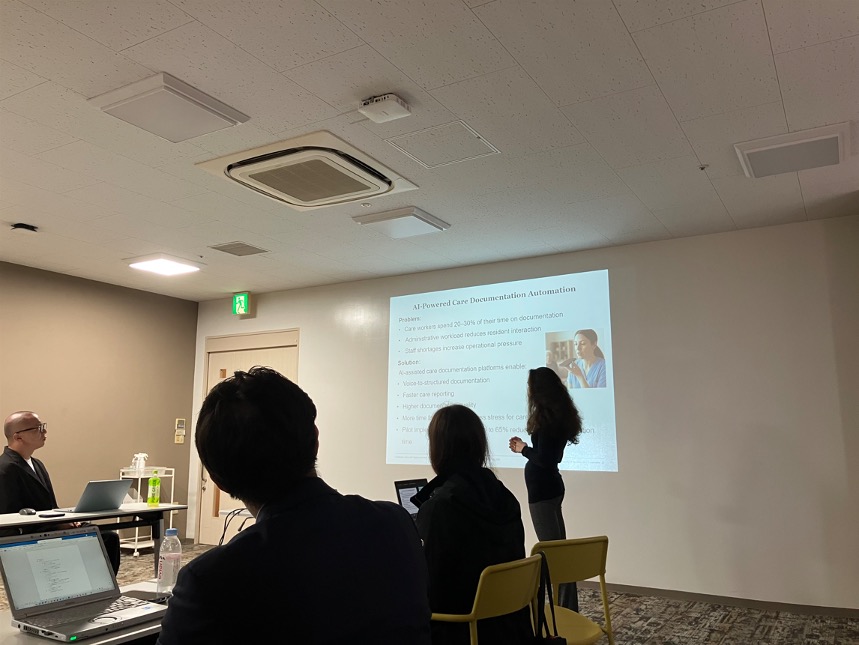
(Photo taken during a visit to Care Tech Lab)
— What were your impressions of Japan’s “Living Lab” system? I think the Living Lab system is excellent
. I felt that the process of evaluating and demonstrating technology in an environment that closely resembles actual care settings, while frontline staff and development companies collaborate to make continuous improvements, is an essential approach to creating “technology that is actually used.”
In Switzerland, conducting pilot studies on technology in long-term care facilities is not easy due to various constraints related to obtaining ethics committee approval and protecting personal information. After seeing the efforts at Kashiwa Living Lab to conduct research and pilot studies in an environment that closely resembles actual long-term care settings, I believe that this “lab-style” approach could also be adopted in Switzerland.
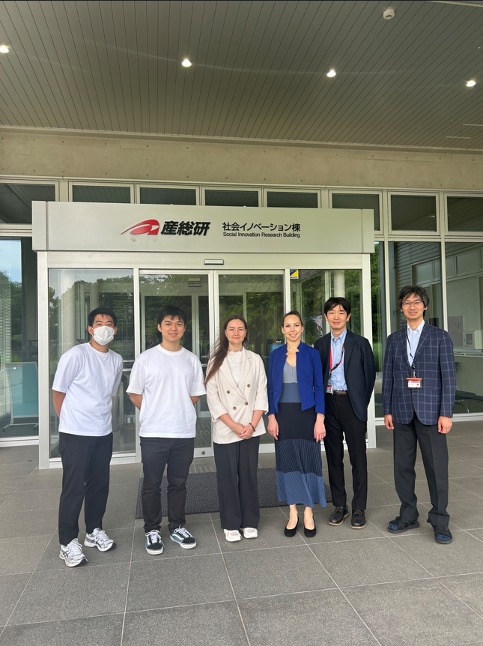
(Photo taken during a visit to Kashiwa Living Lab)
3. The Potential for Expanding Japanese Care Technology into Switzerland and Europe
―― How do you view the potential for care technology manufactured in Japan to be accepted in Switzerland and Europe? I believe there is ample potential
. It is clear that Switzerland will also face a severe labor shortage over the next 15 to 20 years, so demand for care technology will certainly increase.Japan began its efforts in this field around 2012–2013 and has accumulated over 10 years of experience and a proven track record. This experience is extremely valuable, and I believe Switzerland and Europe have much to learn from Japan.
However, there are also challenges. First is the issue of cost. The cost of care technology in Japan remains high, and for it to become widespread, cost reductions through mass production and the establishment of government subsidy programs are necessary.Next is the issue of cultural and institutional adaptation. Since the culture of caregiving and the regulatory frameworks—including product certification procedures—differ between Japan and Switzerland, it is not enough to simply export the technology; customization to suit local conditions is necessary.Furthermore, Switzerland imposes strict ethical requirements—such as approval from ethics committees—when introducing new technologies. While these requirements are intended to ensure safety and quality, they can also make the process of adopting innovative technologies more time-consuming and complex.
Furthermore, we cannot ignore the psychological resistance to robots. Among Swiss care staff, there are quite a few who feel anxious about being replaced by robots. However, I would like to promote the idea that robots are not meant to replace people, but rather to complement and support them.I believe that Japan’s approach to change management—which begins with understanding why change is necessary and then gradually encourages acceptance—can be applied in Switzerland as well.
— What kind of care technology do you think is needed in Switzerland?
In my view, what is most needed in Switzerland right now is technology that reduces the workload of care staff and supports tasks that are physically and administratively demanding. Acceptance of robotics in Swiss care settings is still relatively limited, and person-centered care—which relies on manual, human-based care—continues to play a central role.
Among these, I see great potential in “AI-assisted voice input and recording technology.” This technology can streamline the creation of care records, the preparation of reports for health insurance companies, and other administrative procedures. If we can reduce the administrative burden on care staff, they will have more time to devote to direct care for their clients.
Furthermore, monitoring systems and sensor technology will also contribute significantly to improving safety and enabling the early detection of health issues. In addition, service robots that handle meal service and the transport of supplies should help reduce the workload and improve efficiency in long-term care facilities.
Finally, “Information and Communications Technology (ICT)” holds great potential for improving communication and collaboration among care professionals, healthcare providers, residents, families, and other stakeholders.Examples include electronic care records, digital communication platforms, telemedicine services, and AI-assisted documentation systems. These technologies facilitate the smooth sharing of information, enhance the continuity of care, and enable the delivery of more coordinated care.
4. Human Resource Development and Expectations for Future Japan-Switzerland Collaboration
―― What are your thoughts on recruiting and training care workers?
This is a major challenge shared by both Japan and Switzerland.In Switzerland, caregiving is generally viewed as a “demanding and grueling profession.” Although pay has been improving in recent years, younger generations tend to choose other professions in search of better working conditions and career prospects, and it remains difficult to attract people to this field.Switzerland is currently working to raise the professional and social status of caregiving and, through the use of technology, redefine the work as a “highly skilled and rewarding profession.” Specifically, bachelor’s, master’s, and doctoral programs in nursing and caregiving are being established.To my knowledge, Swiss universities have launched the first courses on the implementation of care technology in long-term care facilities, reflecting the growing importance of technological innovation in the care sector.
I understand that Japan faces similar challenges. For example, I’ve heard that SOMPO Care Co., Ltd. is conducting activities to help children recognize from an early age that caregiving is a “normal profession” by inviting them to their facilities to see how actual caregiving work is carried out on a daily basis. Such efforts to engage the next generation are extremely important, and these are initiatives we would very much like to emulate in Switzerland as well.
Furthermore, when it comes to introducing technology, I discovered through my observations in the field that younger people are not necessarily the most enthusiastic about new technologies. There were even cases where veteran staff members in their 60s embraced technology more readily, suggesting that an individual’s attitude and organizational culture are more important than age.I believe the key to widespread adoption lies in researchers and support organizations taking on the role of carefully addressing frontline staff’s “fear of change.”
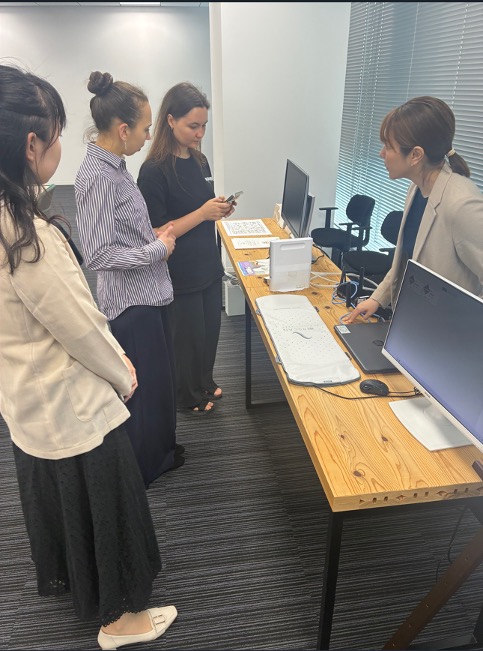
(Photo taken during a visit to Future Care Lab in Japan)
―― Could you share your outlook on future collaboration between Japan and Switzerland?
Japan is a global leader in this field. Switzerland faces similar challenges, and I believe we can work together to find solutions. We hope to advance our collaboration in various ways, including research exchanges, joint projects, and pilot implementations of technology.
This was my first visit to Japan, and I was deeply impressed by the maturity of Japan’s approach to care technology. Japan already had well-established answers to many of the research questions I have been seriously exploring in Switzerland. Being able to share that knowledge made this visit extremely fruitful.
I believe that for Japan’s care technology to spread throughout Europe, it is not enough to simply export the technology itself. It is equally important to share the “know-how for on-site implementation” that Japan has cultivated—namely, the process of identifying solutions tailored to the needs of care recipients and care staff in Switzerland and establishing an evaluation system based on feedback from the field.I sincerely hope that Japan and Switzerland will deepen their partnership and work together to shape the future of global long-term care.
Thank you very much for giving us the opportunity to visit each of your care labs and for the valuable exchange of ideas. We sincerely appreciate your warm hospitality, your time, and your valuable insights.