
Video Collection of Case Studies on the Implementation of Commercially Available Robotic Care Devices
As the population ages, the number of people requiring care is increasing, and the burden on each caregiver continues to grow. In the field of caregiving, many tasks—such as assisting with mobility and transfers, or changing diapers—are performed while bending at the waist, which can lead to physical ailments such as lower back pain.
Given these circumstances, demand for robotic care devices has been growing in recent years. These devices include those that assist with physical movements to make caregiving tasks easier, as well as devices that use sensors to detect the movements of care facility residents and monitor multiple people simultaneously. Below, we introduce several robotic care devices and examples of their implementation. We also feature video case studies on another page of this site, so please be sure to check those out as well.
Suit-type robotic care devices
This device is worn by caregivers to reduce the physical strain they experience while performing caregiving tasks.
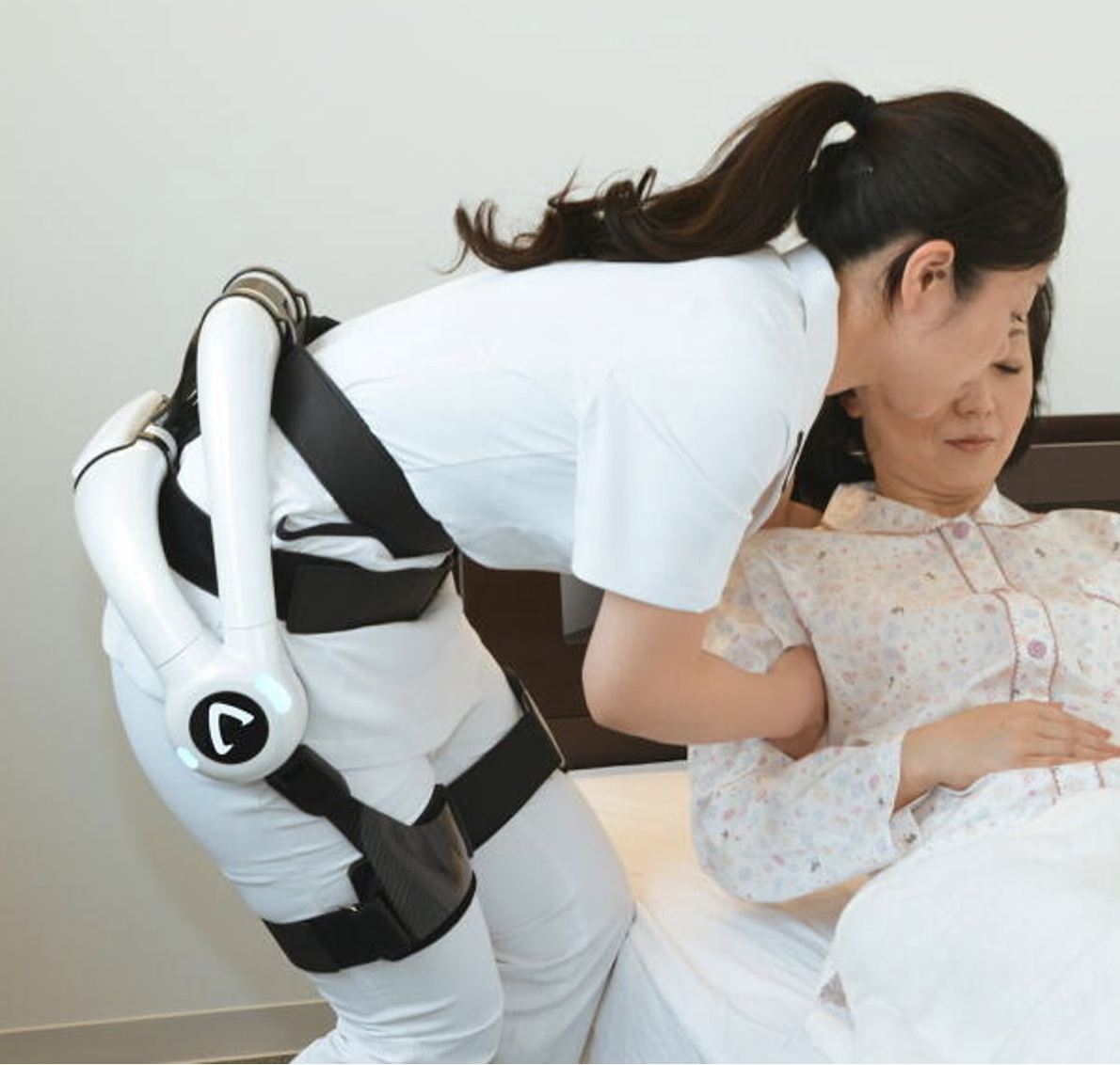
● HAL® Robotic Suit for Care Support (Waist Type)
HAL is a robotic suit worn around the waist. Wearing HAL can reduce the strain on the lower back during caregiving tasks that place a heavy load on the lower back, such as transferring a patient from a bed to a wheelchair. As a result, this helps prevent lower back pain and other physical discomfort.Nanohana Long-Term Care Facility has been using HAL since 2017, utilizing subsidies from the national government and the Tokyo Metropolitan Government. Because it is easy to operate, even care staff in their 60s were able to use HAL to perform physically demanding tasks such as assisting with bathing. You can see how this works in this video
.
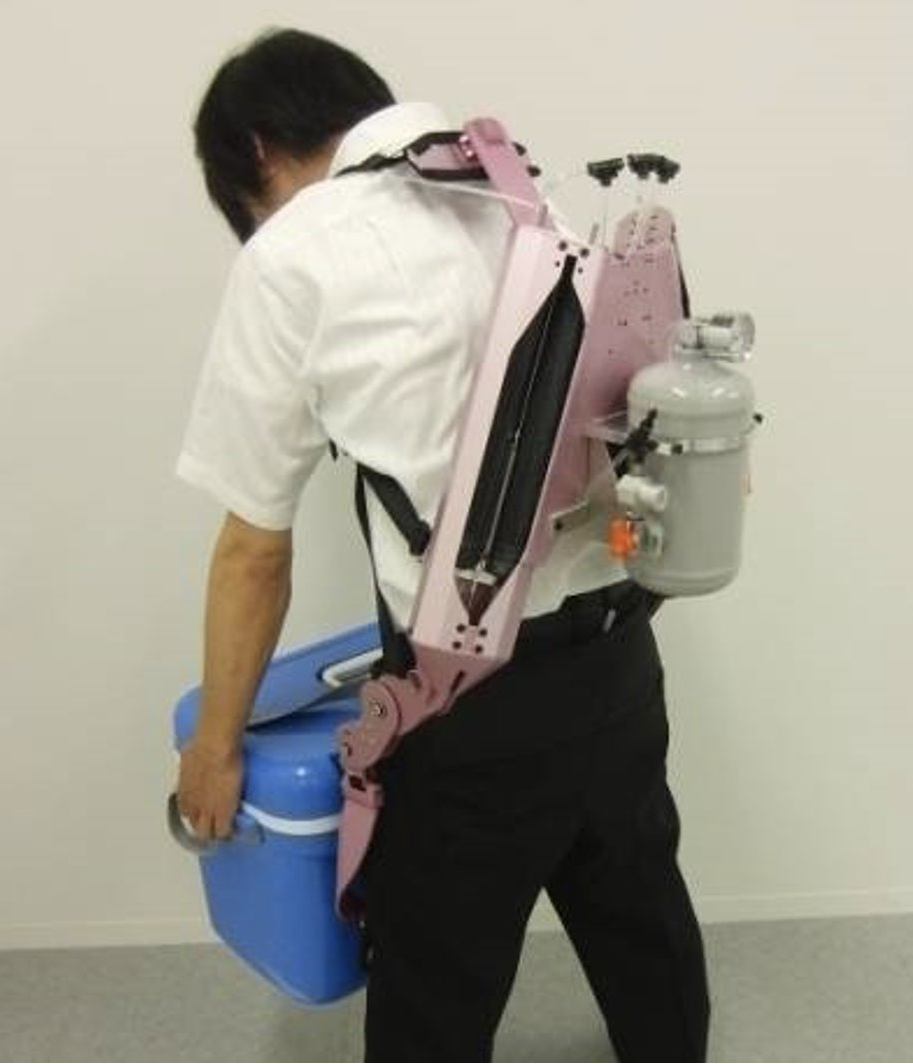
●Muscle Suit for Lower Back Support
The Muscle Suit is a wearable artificial muscle suit that uses compressed air to reduce the strain on the lower back during caregiving tasks that place a heavy load on the lower back. There are two types of Muscle Suits: the first is the standard model, which is operated by breathing through a tube connected to the suit.Inhaling allows for approximately 30 kg of assistance. However, the standard model faced challenges due to the weight of the unit itself and the difficulty of operating it with the mouth. Consequently, the second type—the standalone model—was developed. It is lighter and can be operated using a manual pump. The Silver Wing Shin-Tomi Social Welfare Corporation has also adopted the Muscle Suit and has been using it for tasks such as assisting with transfers independently. You can see how it works in this video
.
Robotic assistive devices for transferring patients
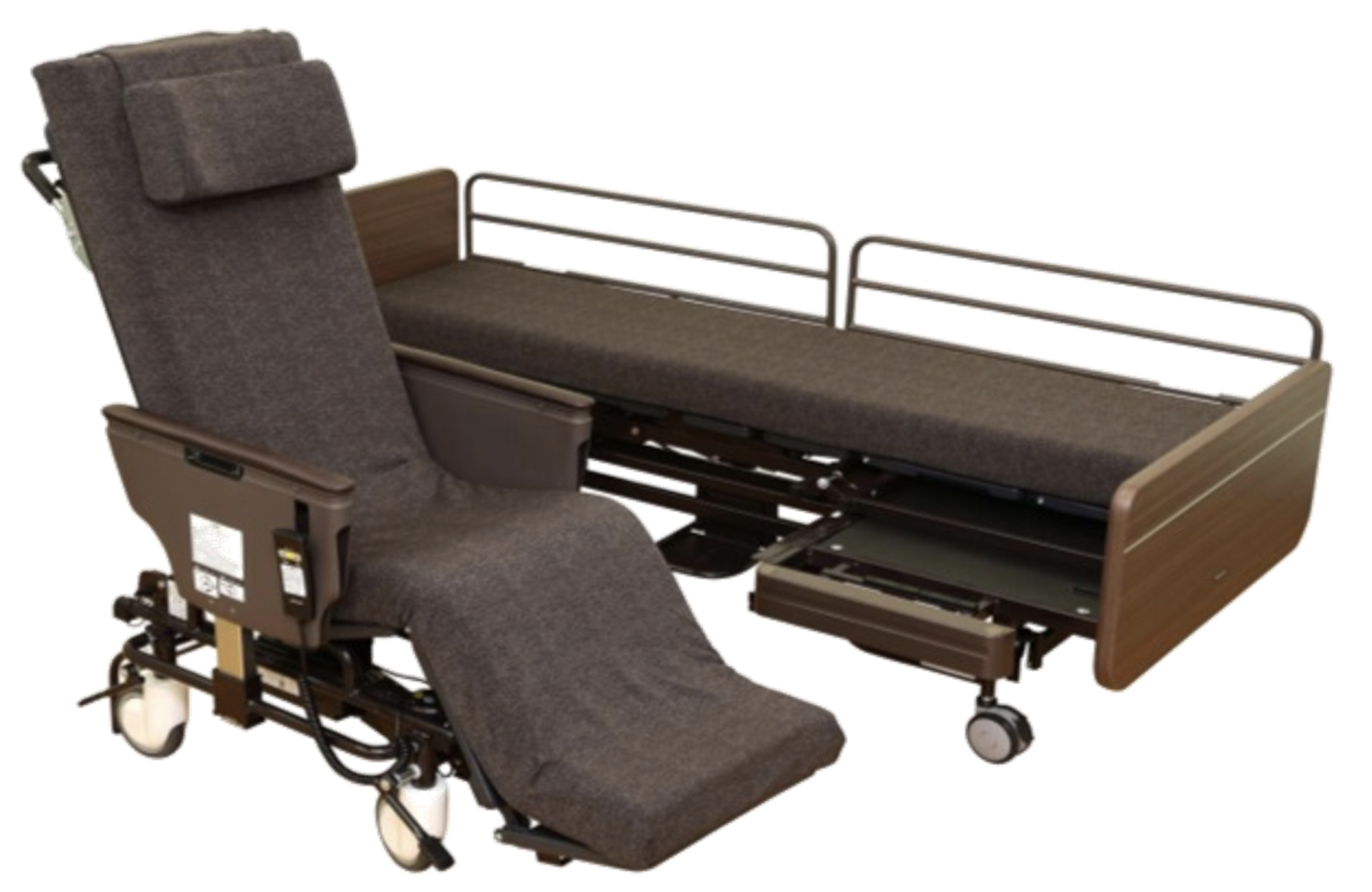
● Rishone Plus Bed-to-Wheelchair
Transfer Robot
The Rishone Plus Bed-to-Wheelchair Transfer Robot features a two-section bed; when one side is detached, it functions as a wheelchair. Even for individuals who find it difficult to get out of bed, the Rishone Plus makes the process much easier.Joyful Kakamigahara Special Nursing Home for the Elderly has also introduced the Rishone Plus, allowing bedridden residents to spend more time out of bed and enjoy the fresh air. You can see how this works in action in this video
.
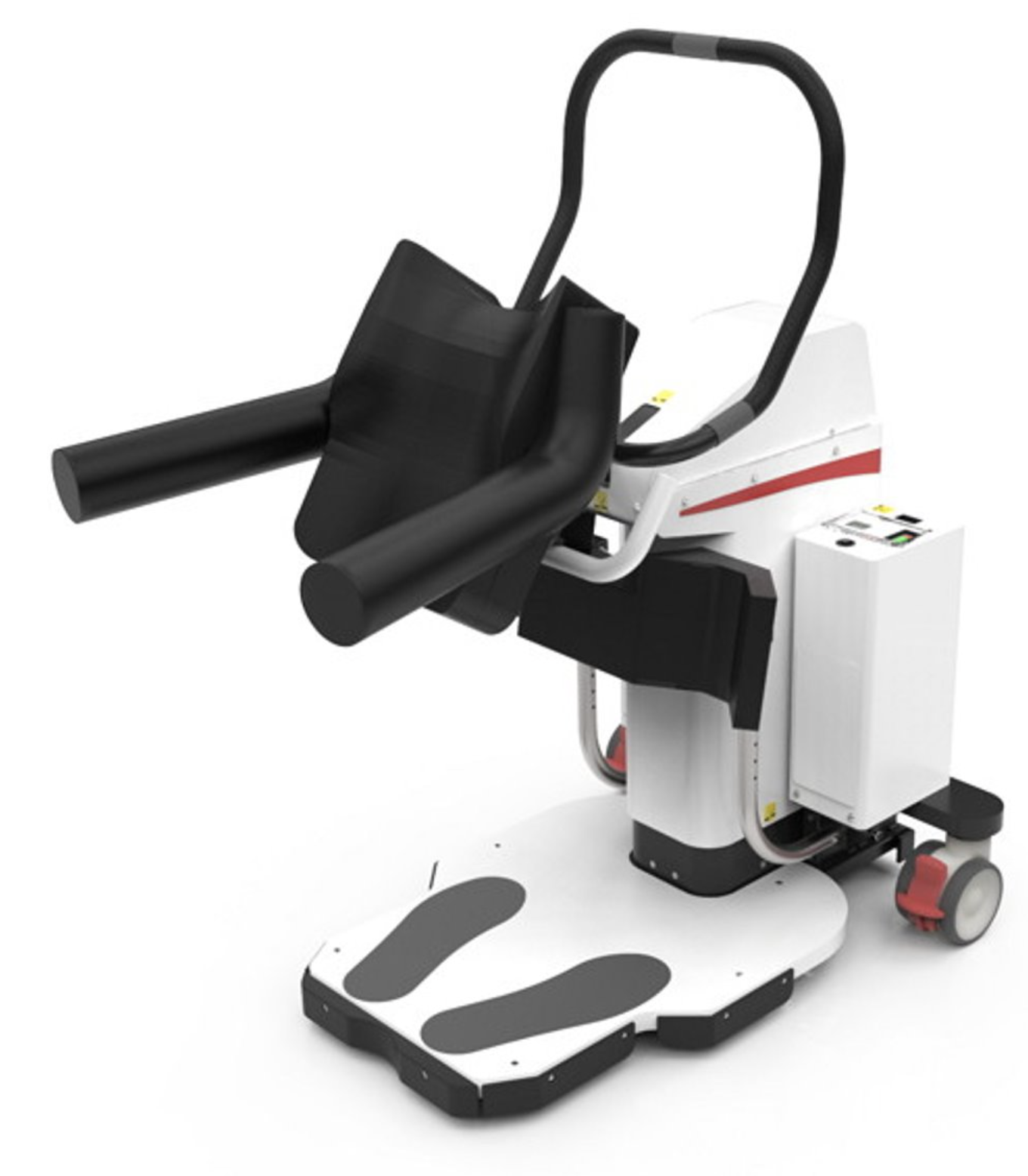
● Transfer Assistance Robot Hug
Hug is a robot designed to assist with transfers between seated positions. When Hug is providing assistance, the user’s hips are raised and they assume a position supported by Hug, allowing for transfers between seats or assistance with toileting.The Chojusan Special Nursing Home for the Elderly also uses this robot to assist with transfers between seated positions and to maintain posture in the changing room. Furthermore, for the residents, who previously felt self-conscious about being carried by caregivers, the introduction of Hug has allowed caregivers to accompany them to the restroom and other areas without hesitation. You can see how this works in the video below
.
Monitoring-type robotic care devices
Monitoring-type robotic care devices can monitor multiple people at the same time.
● Predictive Monitoring System
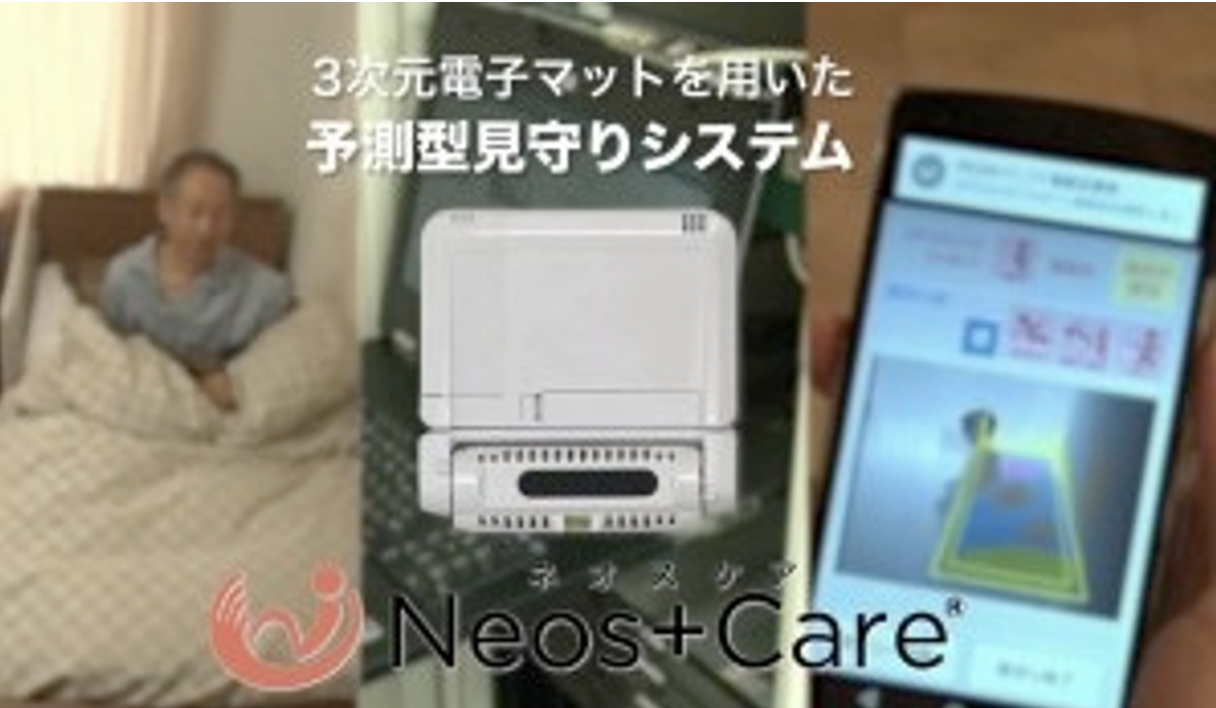
Neos+Care
Neos+Care uses infrared distance sensors to capture a three-dimensional view of the room, enabling continuous monitoring of residents.At Good Time Living Shibaura Island, a private nursing home, Neos+Care was implemented specifically for residents at risk of falling. This not only helped prevent falls but also allowed staff to review the sequence of events in the event of a fall. You can see how this works in the video below
.
●Silhouette Monitoring Sensor
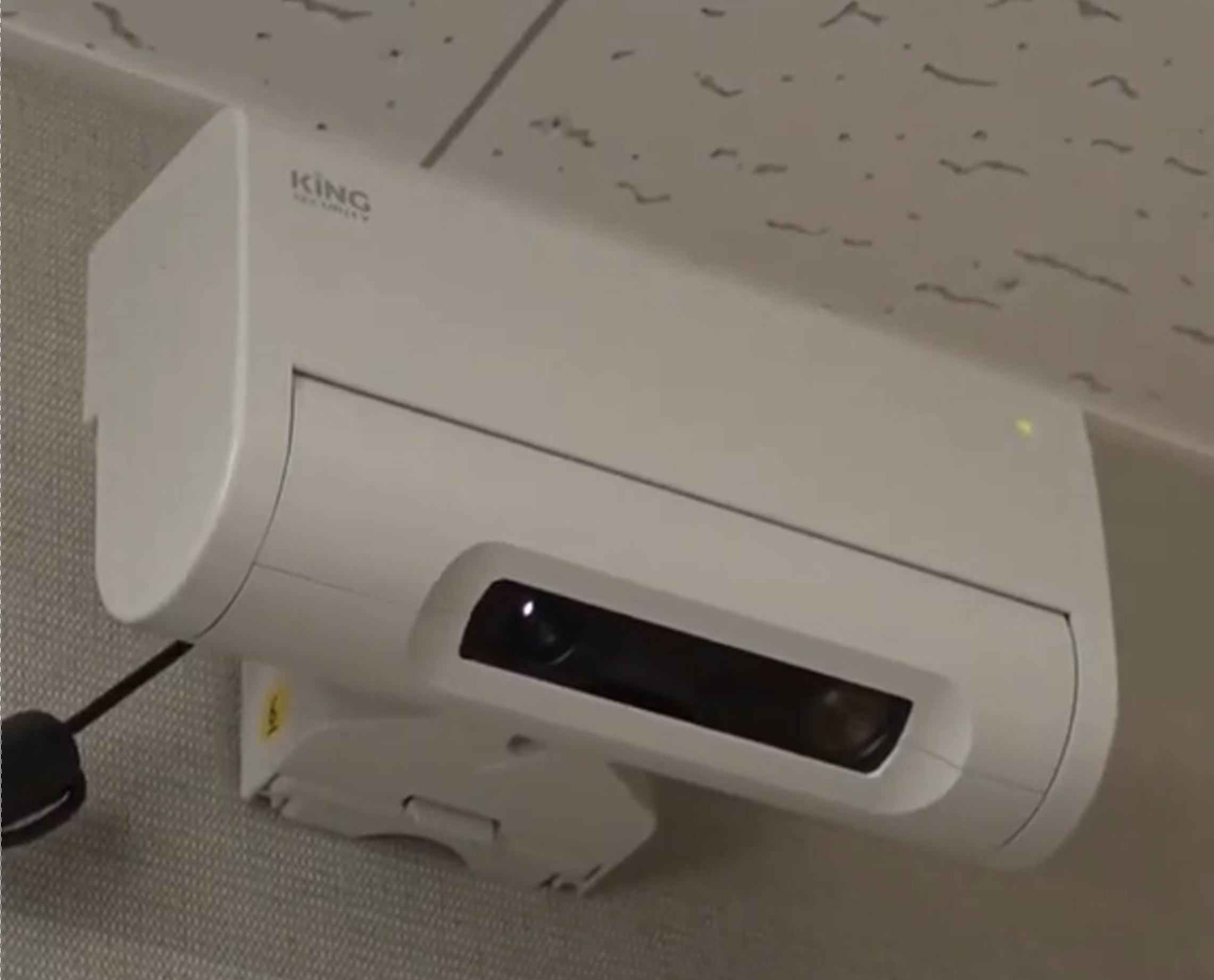
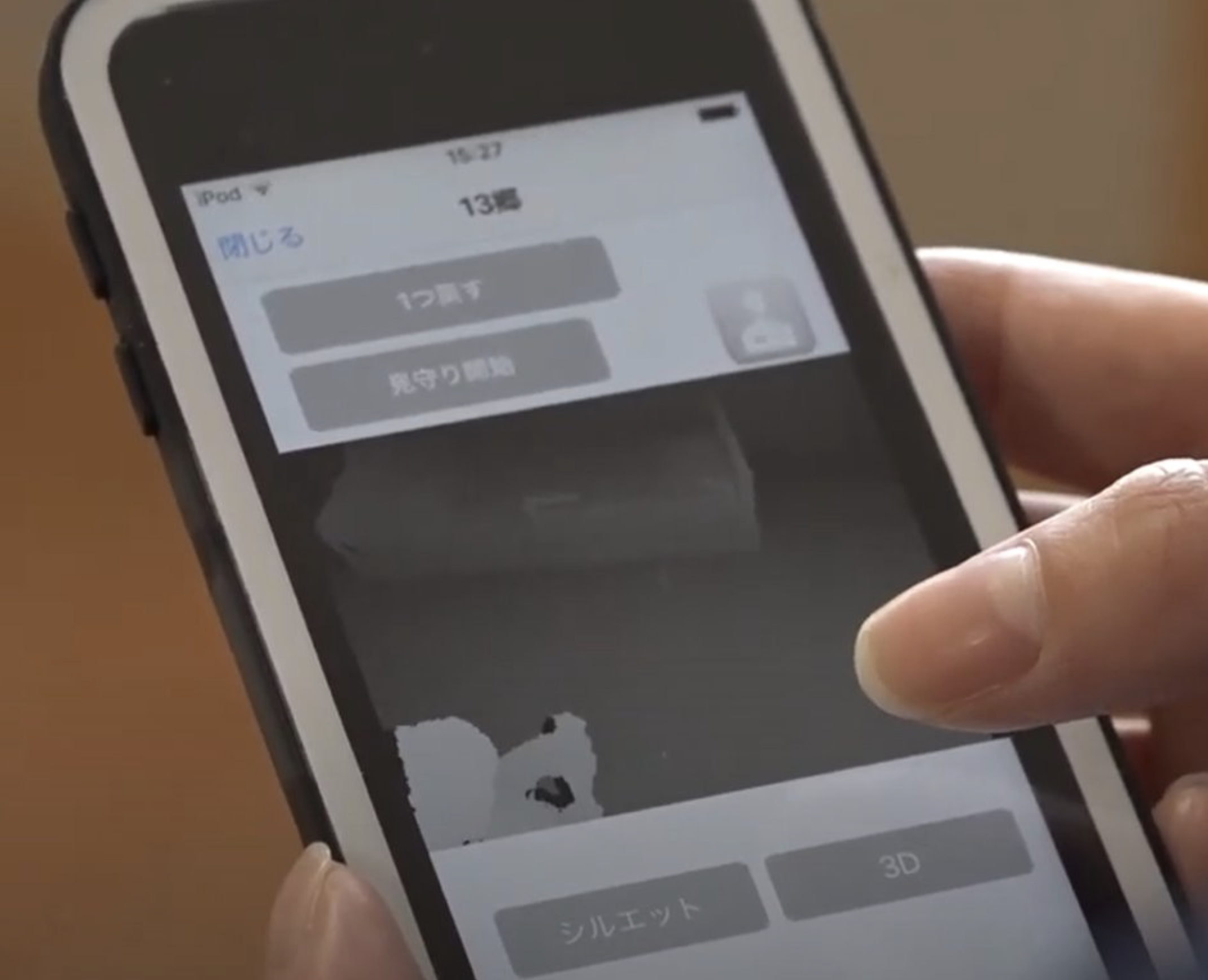
By using the Silhouette Monitoring Sensor, you can check the status of a room using silhouette images. The Ichigo Home Care Support Center, operated by the Medical Corporation Kenko-kai, also utilizes this sensor. Since the sensor is easy to relocate, it can be set up in whichever room is needed on a given day. The Silhouette Monitoring Sensor allows caregivers to determine whether a care recipient currently needs assistance, enabling them to go to the recipient’s side when necessary. You can see how it works in this video
.
Robotic assistive devices for walking
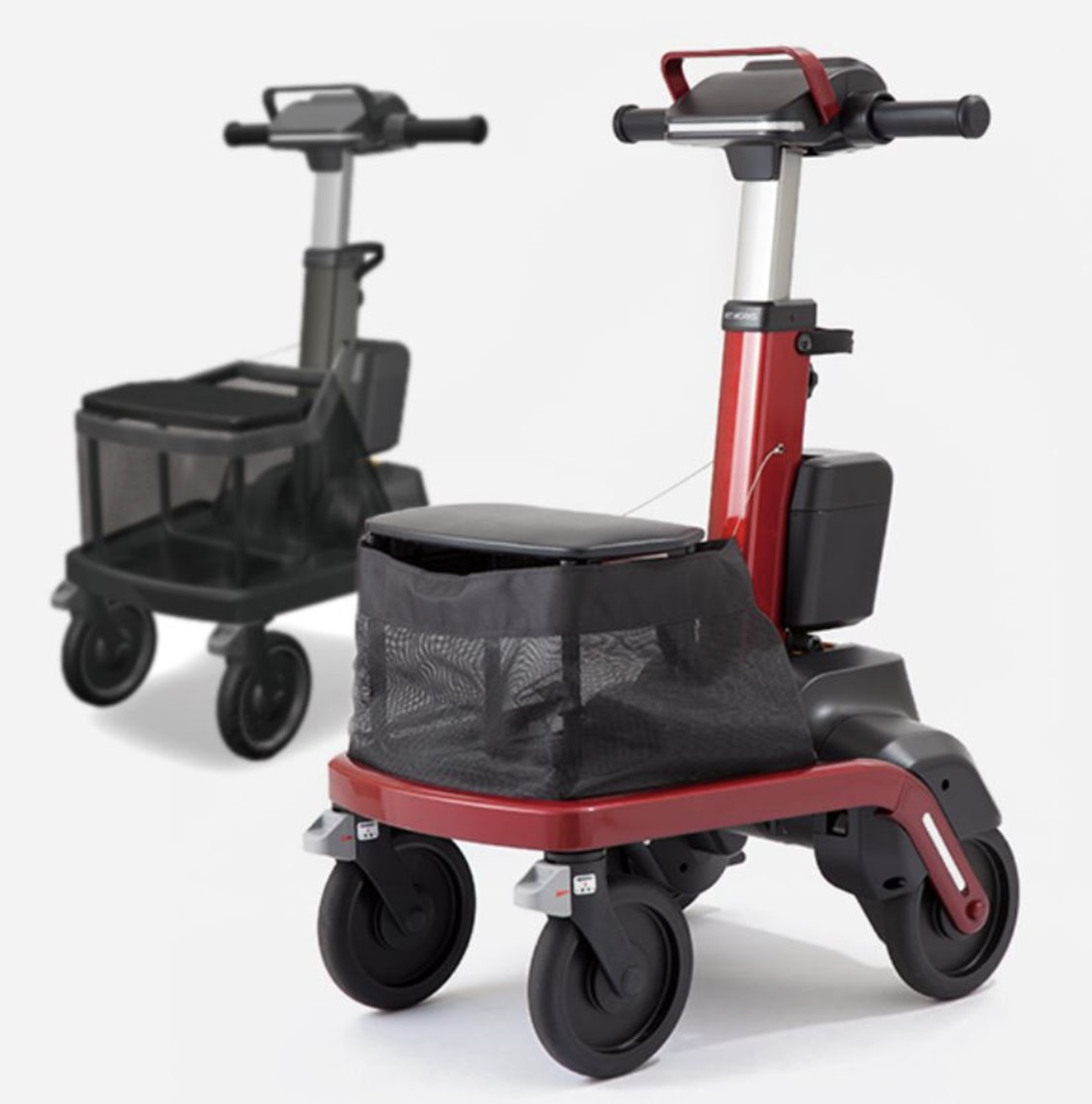
●Robot-Assisted Walker RT.2
The Robot-Assisted Walker RT.2 is a walking aid designed to assist with mobility. Equipped with an electric assist function, it adjusts its control based on the user’s walking condition to provide support.It uses sensors to measure factors such as road surface conditions and the force applied, enabling it to provide walking assistance tailored to these conditions. Kizakino-so Special Nursing Home for the Elderly has also introduced the RT.2, allowing even those who were previously unable to walk to do so and go to the restroom independently. You can see this in action in the video below
.
Robotic care devices designed to assist with toileting
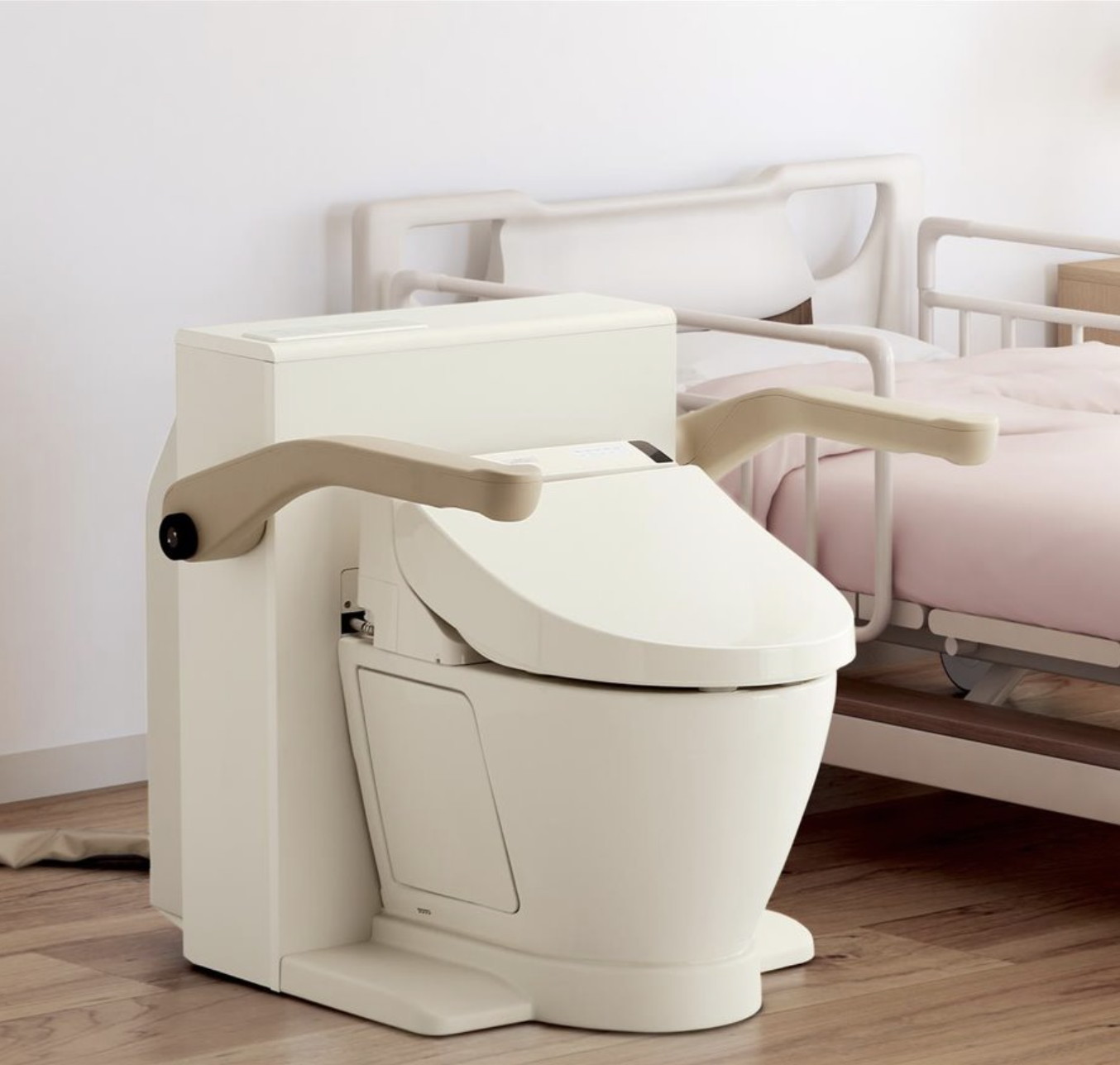
●Bedside Flushing Toilet
This is a flushing toilet that can be installed next to the bed. It grinds and pressurizes waste before flushing it away, and since it is a flushing toilet, there are no odor issues. Additionally, the flush hose is slim, allowing the toilet to be placed in a convenient location. No major plumbing work is required for installation.Shigigaoka Rakuraku-an, a small-scale multifunctional home care facility, also uses the bedside flush toilet, which has allowed them to support residents’ independence while preserving their dignity. For caregivers, it has reduced the effort required to clean portable toilet buckets. You can see how it works in this video
.
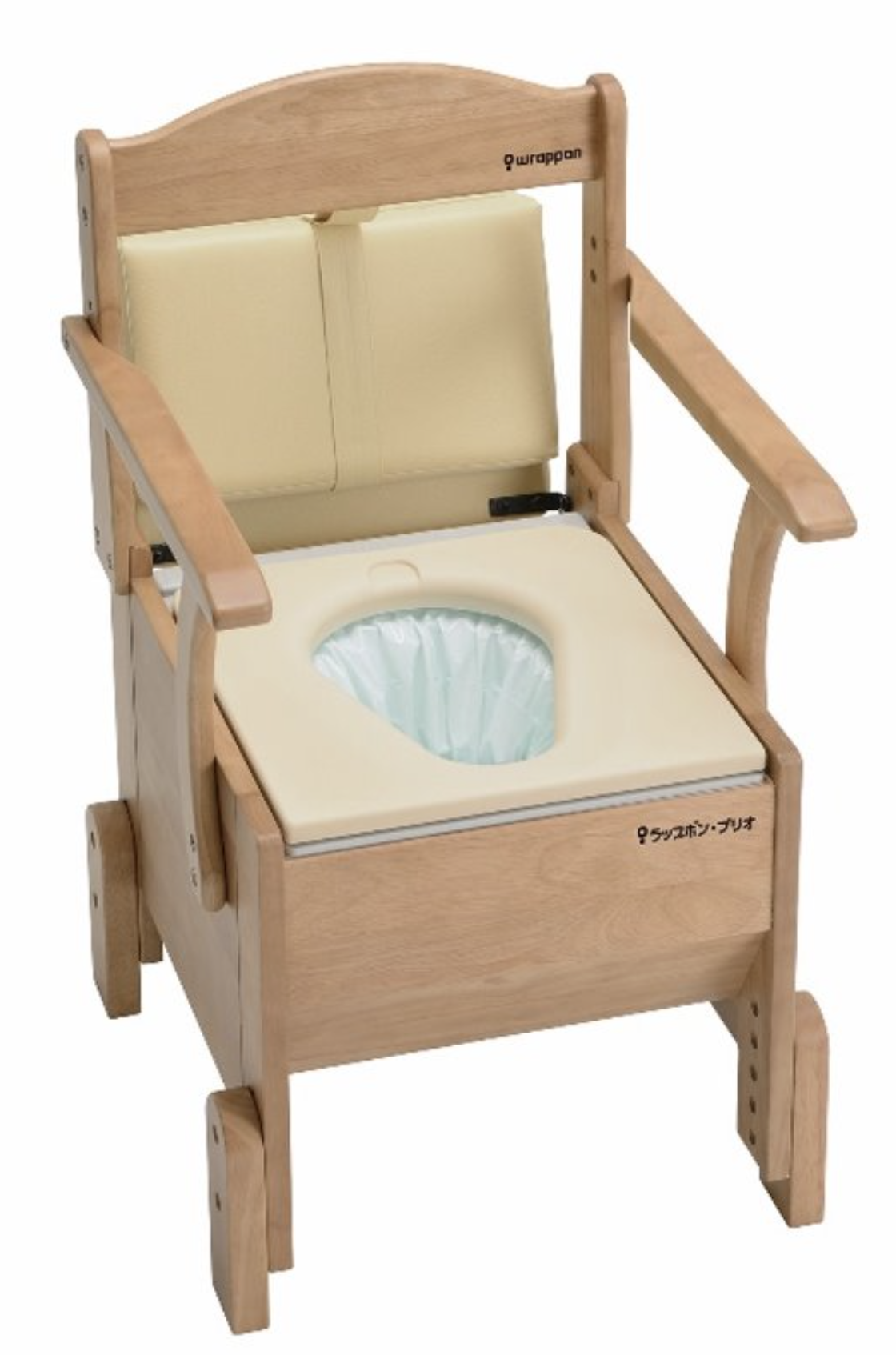
● LapPon: Automatic Wrap-Style Toilet for Long-Term Care
LapPon is a device that processes waste by placing a polyethylene film containing a coagulant into the toilet bowl, allowing the user to eliminate waste into it, and then sealing the film using heat sealing. The heat-sealed enclosure not only suppresses odors but also prevents secondary bacterial infections.The Yodamari Long-Term Care Facility also uses RapPon. Since the sealed bags can be disposed of as is, the workload has been reduced, and residents no longer have to see their waste. You can see how RapPon works in this video
.
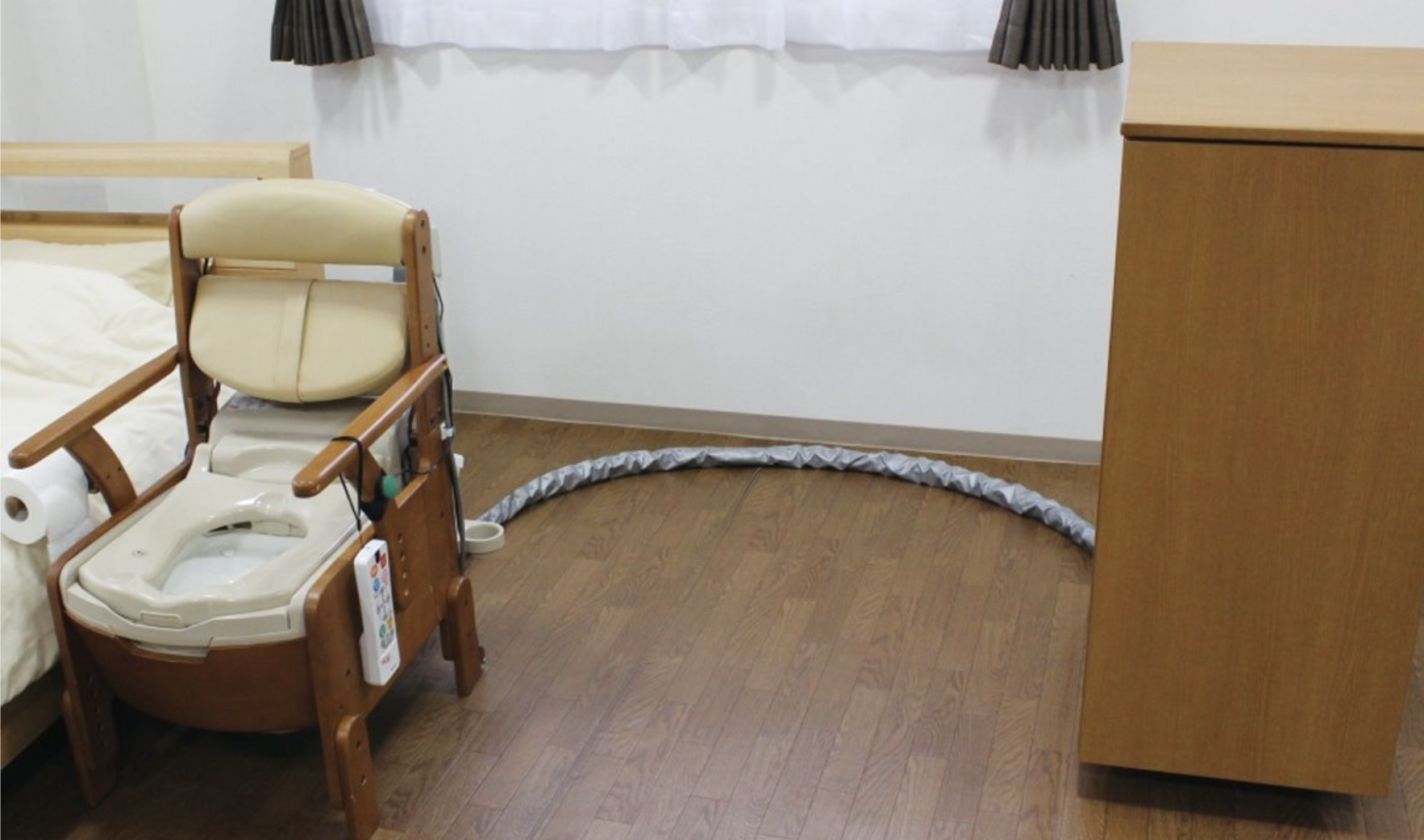
●Portable Flushing Toilet
This is a flushing toilet that utilizes vacuum suction. It comes with a built-in water tank that stores water for use, eliminating the need for plumbing work. In addition to suppressing odors, it can be connected directly to a sewer line, eliminating the need for wastewater treatment. By placing it next to a bed or in a similar location, it reduces the risk of falls for care recipients and minimizes the need to hold it in, thereby promoting independent toileting. You can see how it works in this video
.
As we have discussed, many of the robotic care devices currently in use in care settings were developed through the efforts of manufacturers under the development grant programs administered by the Ministry of Economy, Trade and Industry (METI) and AMED. The development of robotic care devices relies heavily on a collaborative process between users and developers—one that involves listening to the voices of both caregivers and care recipients, understanding their needs, and incorporating post-development feedback—to ensure the devices are refined and improved over time.We hope that even those who have not yet used robotic care devices will find these videos interesting and become at least a little curious about them.