
Recommendations for Using Manuals and Handbooks in the Development of Robotic Care Equipment
In this article, based on the content of the online seminar titled “Thorough Utilization of Guidance Manuals and Other Resources to Accelerate Development: Recommendations for Using the Safety Handbook for the Development of Robotic Care Equipment,” held on January 21, 2022, we will introduce the manuals and guidelines that have been created to date.
First, what kinds of manuals and guidelines have been created to date through related projects of the Ministry of Economy, Trade and Industry (METI) and the Japan Agency for Medical Research and Development (AMED)? Table 1 summarizes the creation dates, classifications, and titles of these manuals and handbooks.
Figure 1: Manuals and Guidelines Developed Under AMED Projects
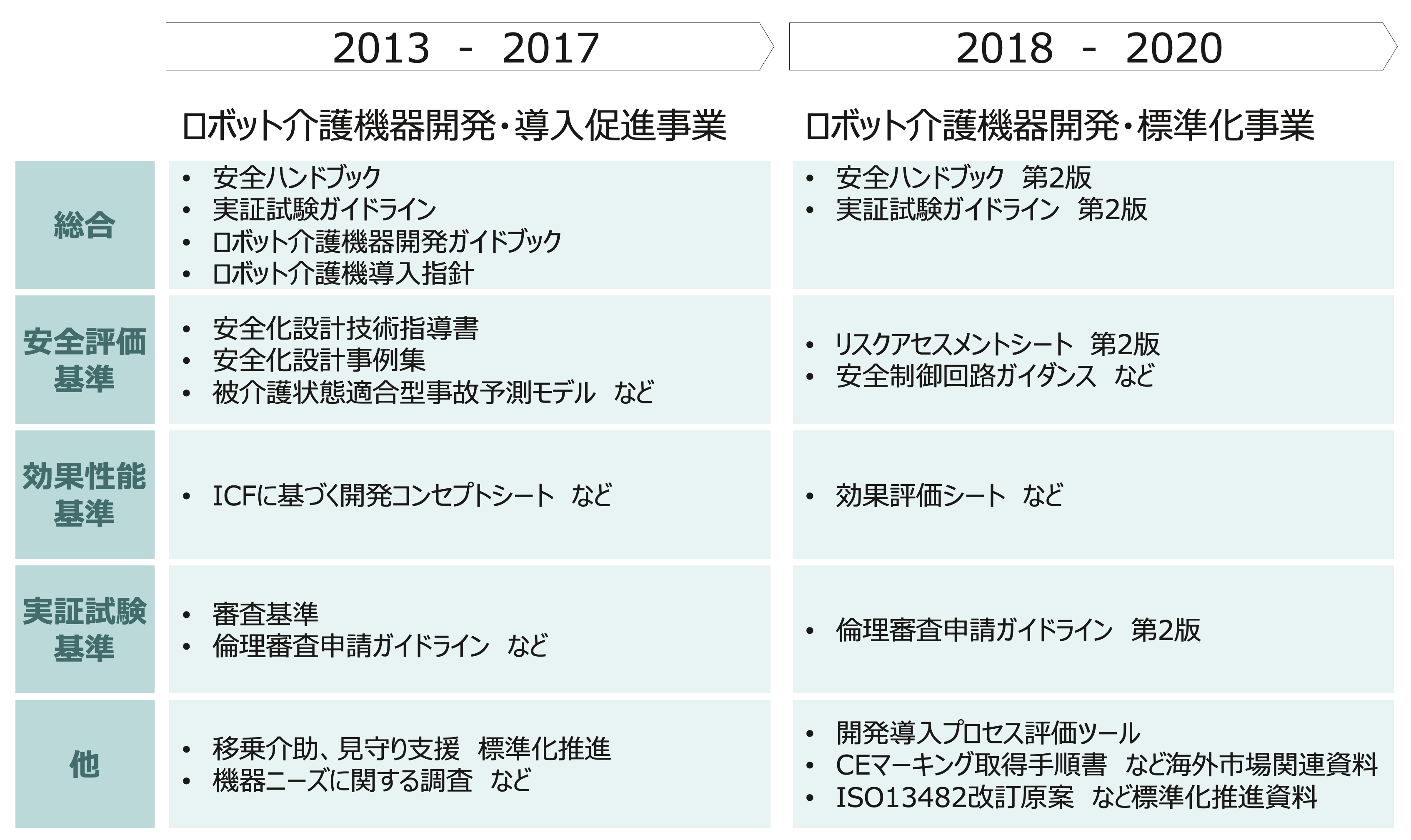
A wide range of useful manuals and handbooks—including safety evaluation standards, performance standards, and validation testing standards—which are essential for the development of robotic care devices, have been compiled. These are available for free download from this portal site.
By the way, when is the best time to consult these manuals and handbooks? Figure 2 provides a simple overview of this.
Figure 2: Positioning of the V-model and Representative Manuals
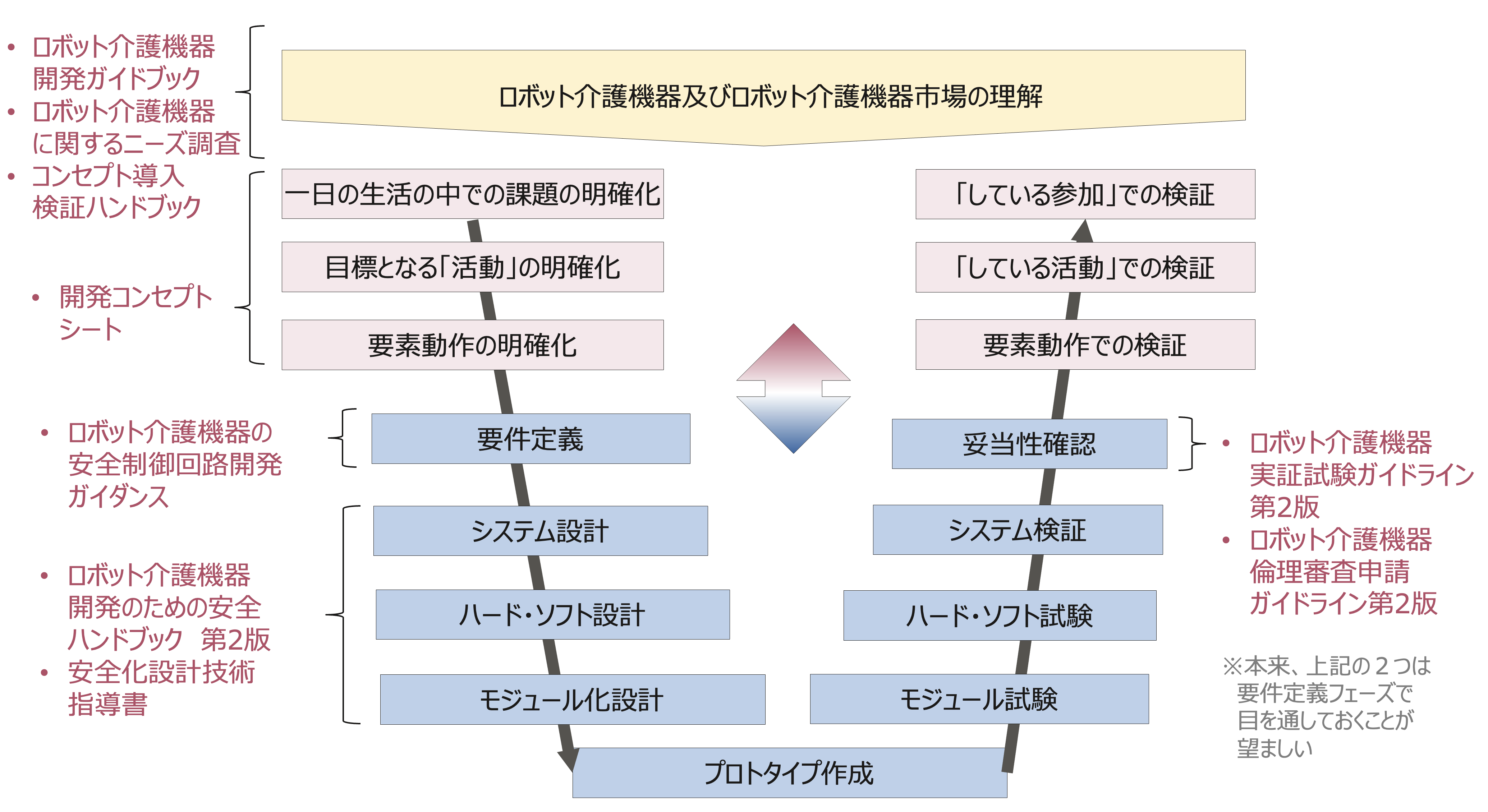
If you are a developer of robotic care devices, you have likely heard of the V-model at least once. In projects related to robotic care devices conducted by the Ministry of Economy, Trade and Industry (METI) and AMED, the “V-model for the development of robotic care devices” is proposed as a comprehensive process spanning from robot safety design to the formulation of safety verification plans and safety testing (for details, please refer to page 4 of the “Safety Handbook for the Development of Robotic Care Devices, 2nd Edition”).Figure 2 highlights specific manuals that we recommend reviewing among the various available resources.
First, the following two documents are particularly useful for understanding the market for robotic care devices and care devices in general:
・"Guidebook for the Development of Robotic Care Equipment"
・"Survey on Needs for Robotic Care Equipment" These
documents summarize the characteristics and needs of the equipment currently being developed by robotic care equipment developers from a general perspective. Please note that challenges and needs in the care setting are constantly changing. It is particularly important to stay informed about the latest developments—such as the strengthened infection control measures and contactless services necessitated by COVID-19—by maintaining daily communication with care facility staff.
Next is the “Development Concept Sheet.” Before beginning the development of robotic care equipment, it is important to first deepen your understanding of the care scenarios where such equipment is needed. This sheet is designed to assist with that process. By breaking down the care scenario to clarify target activities and specific movements, you can move closer to developing equipment that can be effectively utilized in actual care settings.
When actual development begins, the following manuals will serve as useful references:
・"Safety Handbook for the Development of Robotic Care Equipment, 2nd Edition"
・"Guidance on the Development of Safety Control Circuits for Robotic Care Equipment"
・"Safety Design Technical Guidelines"
Of course, the specific considerations during development will vary depending on the type and characteristics of the equipment being developed, but these materials are useful for acquiring the essential knowledge required across all projects.
Finally, there is the “Guidelines for Demonstration Testing of Robotic Care Equipment, 2nd Edition.” These guidelines allow you to consider in advance the nature and procedures of the evaluations required in the latter stages of development; therefore, we recommend reading them early on during the system design and requirements definition phases.
Figures 3 and 4 provide a concise summary of the contents of the numerous manuals and handbooks.
Figure 3: Contents of Manuals and Handbooks (2013–2017)
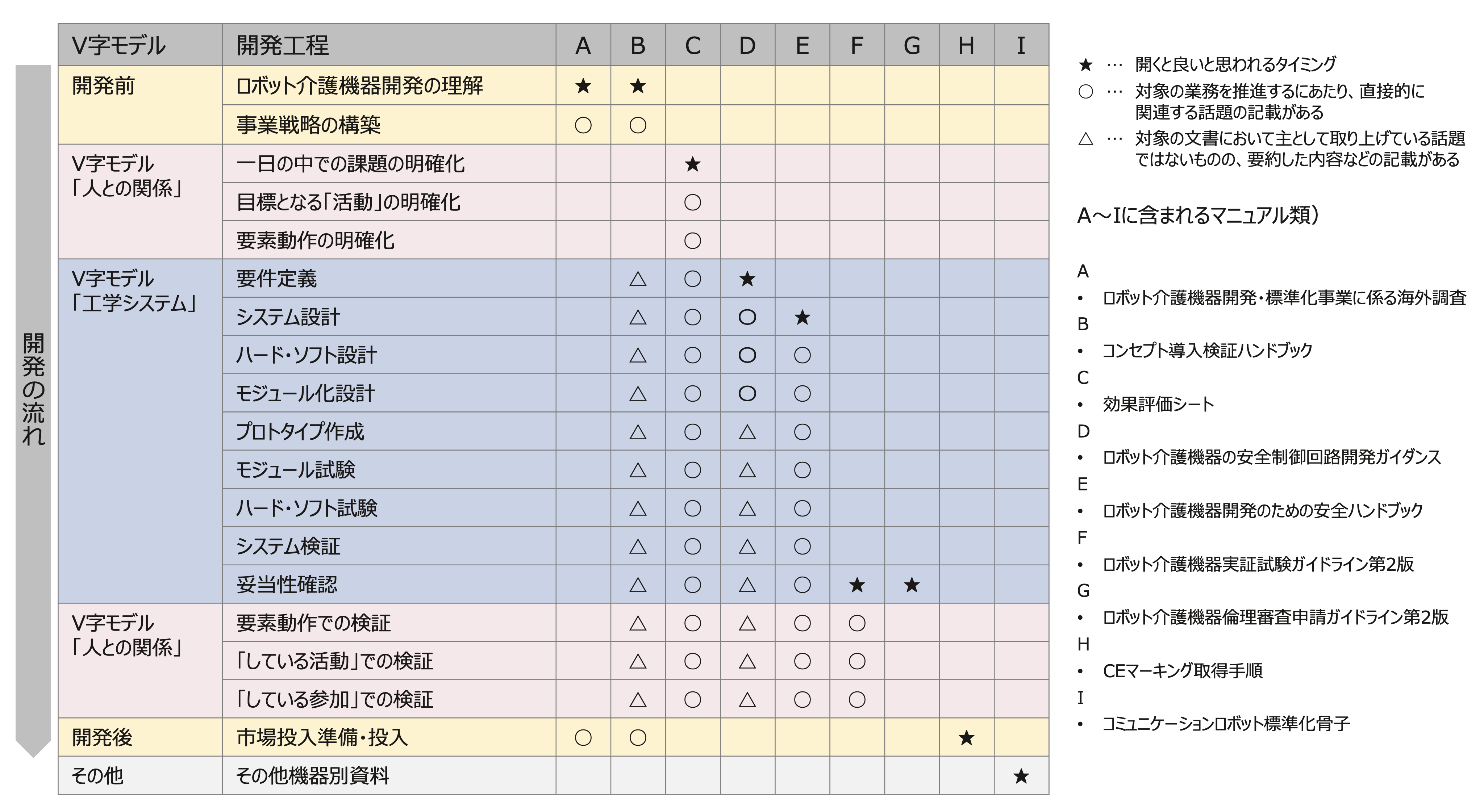
Figure 4: Contents of Manuals and Handbooks (2018–2020)
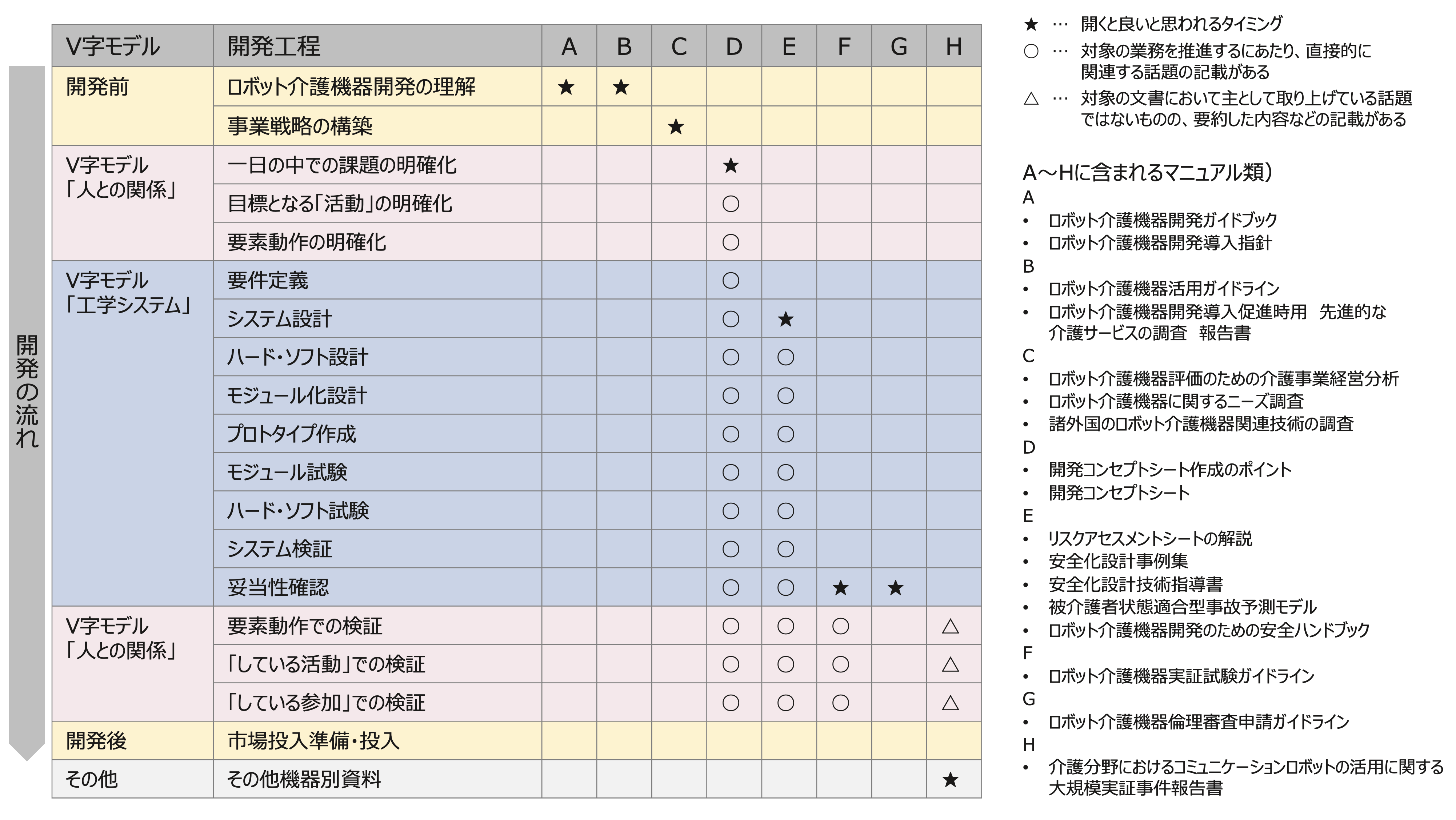
How to Read Tables 3 and 4:
・The tables are organized from top to bottom to follow the development process.
・A through I represent various manuals and handbooks.
・★, 〇, and △ indicate the extent to which each development item is covered.
Within each manual or guideline, some sections focus on the main points, while others provide only an overview.We hope you will make full use of Figures 3 and 4 to easily locate the information you need within the numerous manuals and handbooks and review the relevant sections.
We hope this will serve as an opportunity for those who are about to start using these manuals and handbooks, as well as those who are already using them but wish to review them, to utilize them once again. For businesses already engaged in the development of robotic care equipment, we hope you will use this as an opportunity for reflection and apply the insights to your future development projects.For businesses planning to embark on the development of care equipment, we hope this will serve as a helpful resource for addressing various concerns and uncertainties regarding robotic care equipment, thereby resolving these issues and enabling more efficient development.