
Robots are increasingly playing a vital role in caregiving scenarios, such as assisting with transfers from beds to wheelchairs, monitoring patients, and facilitating communication. However, what kind of preparation is actually required when introducing robots into caregiving settings? Furthermore, what kind of results are being achieved in facilities where robots have been introduced? This page (or article) provides an overview of the current state of robot implementation in caregiving settings, the preparations required for implementation, and examples of successful implementations and their effects. (The content and titles listed here are as of March 2017.)
Before introducing robots, we must first consider "the best care for that person"
When it comes to introducing care robots, many people likely assume that “having a robot will make caregiving easier.” However, Shinji Funada of the Japan Association of Certified Care Workers notes, “Simply introducing a robot—or focusing solely on making life easier for caregivers—will not ensure the continued use of robots.”
Case Study 1: Care Robots for Communication and Monitoring
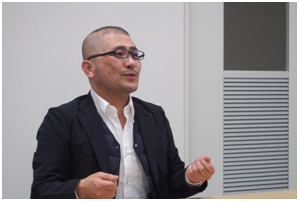
Association of Certified Care Workers>
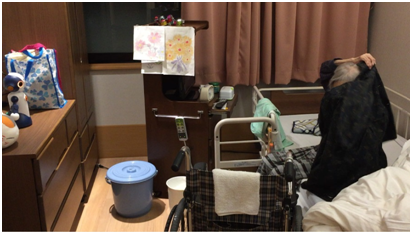
At the facility where I work, we incorporate the ICF framework into our assessments, and before introducing robots, we always begin with refresher training on the ICF (International Classification of Functioning, Disability and Health). From the perspective of “how can the care recipient live a life true to themselves?”, we assess the care recipient’s overall situation to develop a care plan, and we have been using robots as part of that support and as an environmental factor.
For example, a woman who entered our facility having lost her will to live would barely eat, saying, “I feel so guilty for eating this much.” After speaking with her family, we learned that she had originally been a caring and hardworking woman. Based on the hypothesis that she might be feeling reluctant to be cared for, we developed a care plan aimed at helping her reclaim a sense of purpose by being of service to others.
Previously, she required assistance for everything from waking up and getting dressed to transferring to her wheelchair. However, we began using a robot to prompt her to start her daily activities, including waking up. To allow the resident to act at her own pace, we took her daily routine into account and factored in preparation time before activities began. By having the robot prompt her in advance, she gained the leeway to prepare on her own, and by the time staff members actually called out to her, she was already getting up on her own.This woman had previously been too self-conscious when prompted by a person to get up at her own pace. It was also beneficial that staff could simultaneously assess safety and independence while monitoring her movements via a tablet. When she gets up, sensors detect her movements and alert the caregiver, helping to avoid risks. Furthermore, not only was she able to get up on her own, but the sensor footage also showed her putting on a jacket that had been placed nearby.Consequently, we decided to let her change clothes at her own pace. As a result, within a month, she was able to get out of bed, change clothes, and transfer to her wheelchair all by herself. She also began walking with minimal supervision using a walker, which led to a renewed motivation to fold laundry—an activity she had previously enjoyed. She was able to perform the folding motions smoothly, and as a result, she reportedly regained a sense of purpose by “being useful to others” and regained her will to live.
Case Study 2: Monitoring Sensors

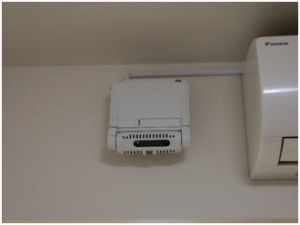
Orix Living, which operates nursing care facilities nationwide, has jointly developed a system with a sensor manufacturer that uses sensors to detect residents’ movements and help prevent falls. By registering the position of a bed, the system detects the resident’s movements and sends alerts to caregivers’ tablets or smartphones if any unusual or dangerous movements are detected. Caregivers can view the resident’s movements via images that protect privacy.
The introduction of this system has successfully reduced the fall rate by half. However, Etsuaki Morikawa, President of Orix Living, notes, “When we first introduced the system, alerts were going off multiple times a day.” He emphasizes that it is not enough to simply install the system; it is necessary to determine a clear plan for how to use it effectively.
The Benefits of Care Robots
As briefly mentioned in the previous section, let’s summarize the benefits of introducing robots into long-term care.
Data can be retrieved
Depending on the robots and sensors used, it may be possible to collect data on the care recipient. By analyzing data such as what time they woke up and when they were at higher risk, it becomes easier to develop a personalized and effective care plan. It also makes it easy for multiple people to share this information.
Moving from person-centered care to standardized care
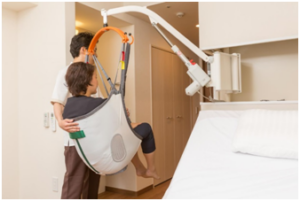
The introduction of robots can help standardize caregiving practices that were previously dependent on individual caregivers. For example, Orix Living has installed patient transfer lifts in all of its facilities. As part of this initiative, we provided classroom training to caregivers to explain why these lifts are necessary and how to use them. This has standardized the transfer process across all facilities, reducing back pain among caregivers and allowing them to focus more on other aspects of care.
Promote the independence of care recipients
Another advantage of robots is that they allow care recipients to feel at ease. Caregivers often struggle to adapt to the recipient’s pace and tend to step in too quickly. As a result, care recipients may feel hesitant to ask for help and end up relying on others to do everything for them. Robots, on the other hand, encourage independence and help expand the range of tasks that care recipients can perform on their own.
The Potential of Robots in Home Care
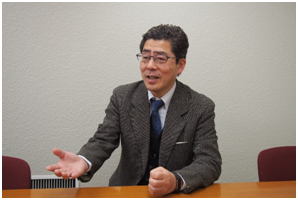
So far, we have mainly discussed the use of robots in nursing facilities, but it is expected that robots designed for home care will also become more prevalent in the future. The types of robots that are likely to be the easiest to introduce in home care are “monitoring robots” and “sensors.” “Care is about improving quality of life, so it is essential to first understand the person’s daily life and gather information,” says Morikawa, President of Orix Living. There are many sensors available on the market for checking on a person’s well-being and monitoring their condition, and some are affordable.
Furthermore, home care often involves situations where the care recipient is expected to move independently. Professor Yukio Honda of Osaka Institute of Technology suggests that walking assistance robots could be particularly useful in such cases.“The care robot market is still small, but the key to its expansion lies in how widely these robots are adopted in home care settings,” says Professor Honda.
Mr. Funada notes that the number of products, such as sensors for toileting, is increasing. “Since many care recipients do not want to rely on others for toileting assistance, I am hopeful that adoption will progress,” he says with anticipation.
To promote the wider adoption of robots in the long-term care sector
While many types of care robots have been developed and pilot testing is underway, there is still a long way to go before they become widely adopted. Experts say that for care robots to gain broader acceptance, changes in the caregiving environment are essential. “There is still a fixed notion that human care is best,” emphasizes Mr. Funada. “Care should be minimized as much as possible, and caregiving should focus on helping care recipients do more for themselves.” Additionally, Mr. Morikawa, President of Orix Living, states:“Simply introducing robots won’t be enough if we can’t use them effectively. Robots should be introduced as part of a broader effort to improve on-site operations and advance ICT integration. It is crucial to recognize that robots are needed for the care recipients, not the caregivers.” Education
for care workers is also essential.At Orix Living, when transfer lifts were introduced, they conducted classroom training to thoroughly explain why they were necessary and how they should be used. Thanks to these efforts, the implementation reportedly went smoothly. It appears that thorough training is also key to a smooth introduction of care robots. Professor Honda also points out that if qualification systems or master craftsman programs for care robots are established in the future, this could further accelerate their adoption.
Furthermore, sharing information from the front lines where robots are being used is effective.While various case studies are currently being published, if communication—such as compiling user reviews and interacting on social media—begins to take shape, it could create a significant momentum for robot adoption. Professor Honda also emphasizes the need to break down the barriers between caregiving and daily life. “We shouldn’t build care robots solely for the purpose of caregiving. By using robots designed for daily life in caregiving, for example, the market will expand as usage scenarios and the user base grow, making robots even more accessible,” says Professor Honda.
If you have any questions about care robots,
If you are currently interested in care robots or would like to try using one, you can contact facilities that use them or the manufacturers that develop and sell them. In addition, local governments may also provide information on introducing care robots.