
Introducing a pilot study on robotic care devices
In today’s super-aging society, we face the challenge of a labor shortage in the long-term care sector. While demand for robotic care devices continues to rise, their widespread adoption has yet to reach a sufficient level. Although robotic care devices serve a variety of purposes, electric walkers—used to assist the elderly and people with disabilities with mobility—are particularly useful for enhancing independence in movement and expanding the scope of daily activities.In the development and manufacturing of robotic care devices such as electric walkers, demonstration studies are conducted to verify the effectiveness of the devices, with the aim of developing safer, more advanced equipment and promoting its adoption in care settings.
In this interview, Yusuke Shikayama, Director and COO of RT.Works Co., Ltd., spoke about the demonstration studies conducted on the electric walker developed by his company, discussing its effectiveness, the publication of research findings, and how the results are being utilized.
(1) Utilizing demonstration studies during the product development phase
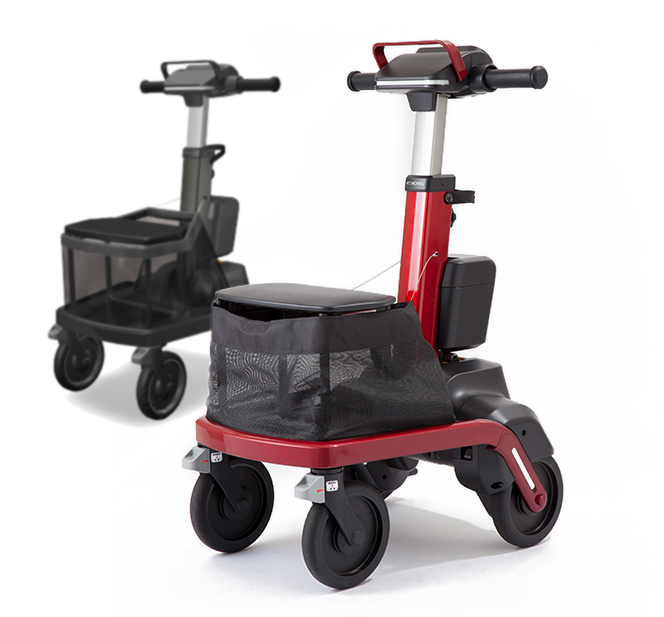
With funding from the Ministry of Economy, Trade and Industry’s “Project to Promote the Development and Introduction of Robotic Care Equipment,” we conducted a field trial at multiple care facilities. In collaboration with research institutions such as Aichi Medical University and various care facilities, this three-month trial involved 54 participating facilities and 98 units of equipment. The trial was designed to verify the effectiveness of the device as an electric walker by comparing it with conventional walkers.
While the effectiveness of conventional care equipment has been evaluated in the past, these assessments have primarily relied on subjective evaluations such as questionnaires. Although this approach allowed for the collection of opinions under specific conditions, it was insufficient for evaluating the equipment as a product intended for widespread adoption across various care settings and usage environments. Therefore, this demonstration project incorporated quantitative methods.Based on the premise of "goal-oriented care," we quantitatively measured and scientifically verified how the "daily life goals" and "activities" of both care recipients and caregivers changed before and after the introduction of the device.By evaluating activity ranges using GPS location data and collecting data on walking time and walking status using walking visualization apps, the results indicated that using the electric walker as a means of daily living could improve quality of life for a wide range of participants classified as requiring care levels 1 through 5.Furthermore, observations of usage scenarios revealed a need for a place to sit and rest while out and about, leading to an improvement in the RT.1 model that included the addition of a rest chair.
In this way, conducting field testing during the development phase to identify and incorporate necessary features allowed us to verify the design based on anticipated needs and usage patterns prior to launch.
② Utilizing demonstration studies during the product introduction phase
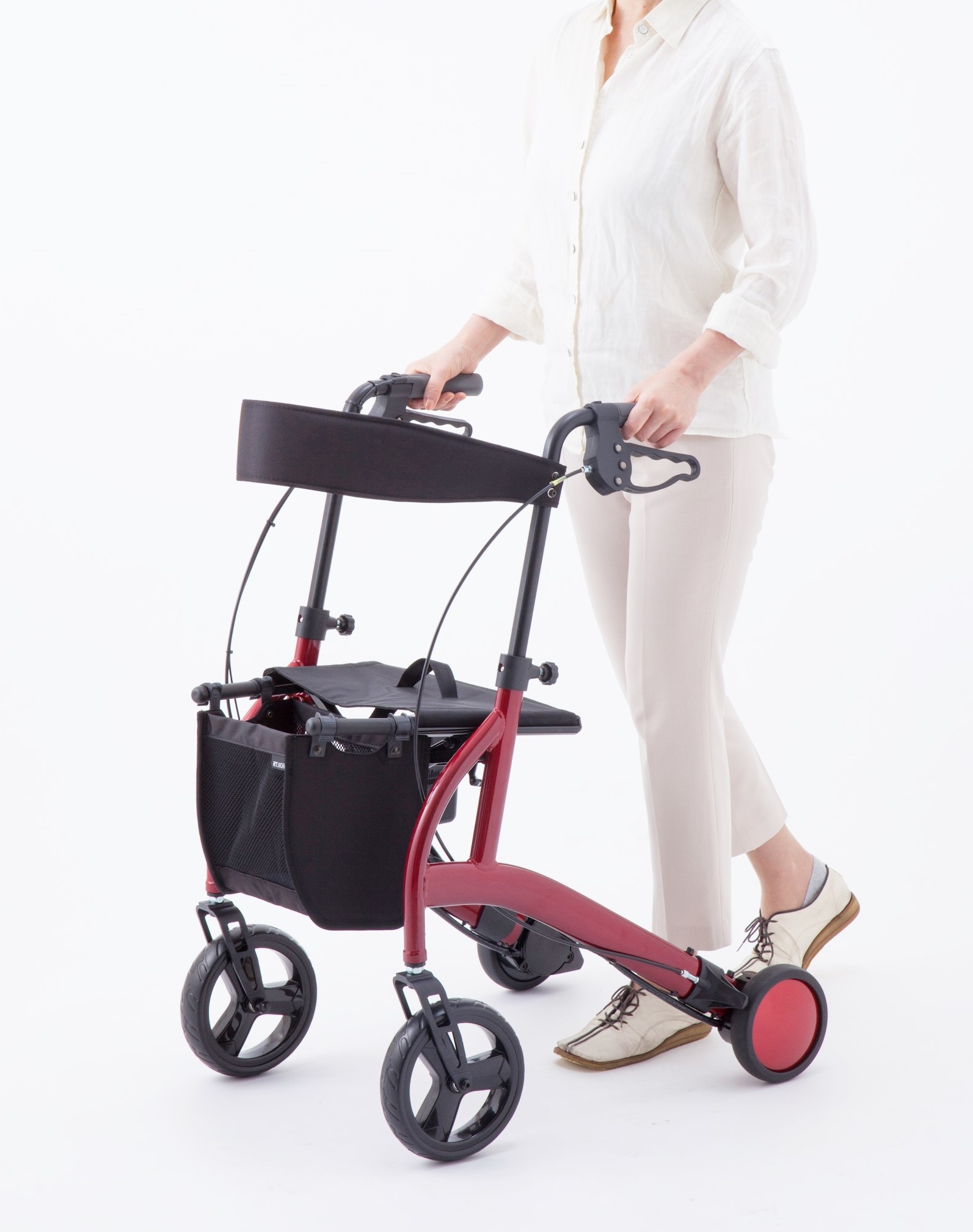
I believe that conducting this large-scale demonstration—involving approximately 100 units across multiple facilities in a wide range of regions—proved to be an effective way to instill confidence in both the facilities considering adoption and the users themselves.
This demonstration was carried out through a collaborative effort involving three key parties: the manufacturer, intermediaries such as rental companies, and the nursing care facilities serving as the demonstration sites.Since the application deadline was tight, coordinating the three parties to form a team and submit the entry required significant coordination among the companies, which presented some challenges. However, conducting the trial together with distribution partners, such as rental companies, helped foster a deep understanding and interest in the product itself and its practical application on-site among these partners.
This proved to be extremely valuable when establishing distribution channels after the product’s commercial launch, and I believe it was one of the key benefits of conducting this demonstration.
③ Utilization of Empirical Research from a Clinical Perspective
As part of the Japan Agency for Medical Research and Development’s “Robotic Care Equipment Development and Standardization Project,” we conducted a clinical validation study by providing the RT.2 device to Ouchi Hospital¹.
The study included measurements using the InBody S10 body composition analyzer (which showed a significant increase
in muscle mass), QOL score measurements (which showed a significant improvement in social quality of life), and FIM score measurements(which indicated that a high level of independence in daily living was maintained even after discharge), and mGES scores (which indicated a steady improvement in the degree of confidence in walking safely in daily living environments). We were thus able to analyze data on physical condition improvements resulting from the use of the electric walker, as well as associated psychological satisfaction scores—data that had not been collected in previous demonstrations.
Publication of the Pilot Study
We publish the results of our empirical studies in catalogs, brochures, and on our product website.
Additionally, in collaboration with Dr. Yamanaka (Takashi Yamanaka, Associate Professor at the Graduate School of Medicine, The University of Tokyo), who participated in “③ Empirical Studies from a Clinical Perspective,” we hold seminars for care managers. During these sessions, we provide explanations regarding the target users and the effectiveness of the devices, as well as important considerations for their use, as part of our efforts to raise awareness of electric walkers.
Utilizing Empirical Research
How we utilize the objective data obtained from pilot studies varies depending on the stage: in the early stages of development, we use it to inform the development process, while after launch, we use it for marketing and product improvements.
The fact that we wereable to collect quantitative data not only served as a valuable reference for product development and improvement but also made it easier to demonstrate the device’s usefulness to external stakeholders.
The Effectiveness and Significance of Empirical Research
While electric walkers are not intended to replace all walkers, they do offer a solution to needs that existing non-electric models cannot address.
To deliver products that meet these needs and raise awareness of electric walkers, I believe that empirical research is effective in highlighting—from both qualitative and quantitative perspectives—how they differ from conventional walkers and what advantages they offer.Furthermore, I believe it is important to tailor the presentation of research data to the specific audience.
For example, quantitative data is useful for therapists, while presenting qualitative data—such as specific case studies or anecdotes—to care managers can help them more easily visualize the potential benefits for their own patients.
1) Daiwa Medical Corporation, Ouchi Hospital
[Reference]