
Aiming for Technology That Makes People Say, “We’re Glad Japan Is Here”—CYBERDYNE and TANOTECH Discuss the Global Expansion of Care Technology and Japan’s Future
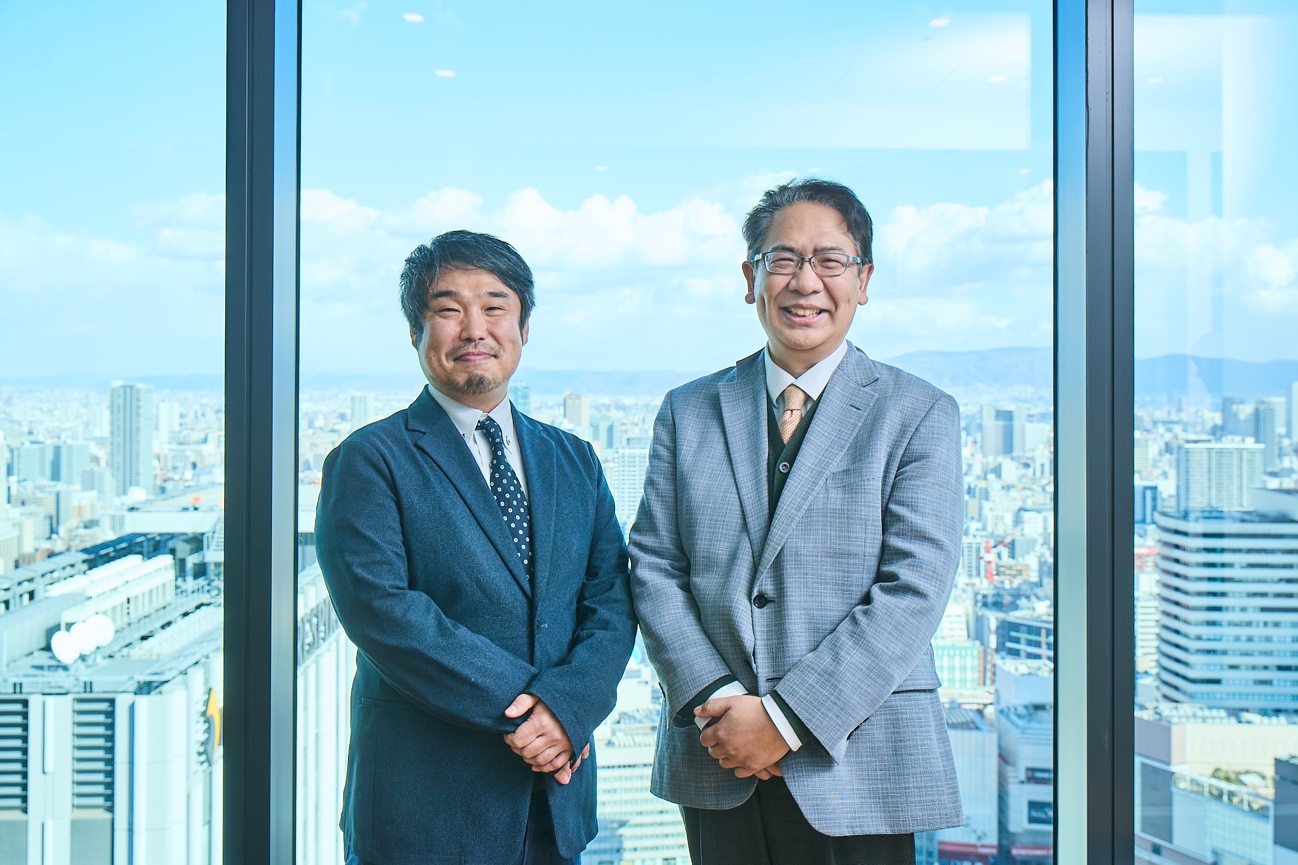
In Japan, where the population is aging and birth rates are declining, the development of care robots is an urgent priority. However, the path ahead is by no means smooth. In addition to technical challenges in product development, various obstacles stand in the way of implementation in the field and overseas expansion.
CYBERDYNE Inc.,developer of the wearable cyborg "HAL®," and TANOTECH Inc., provider of the rehabilitation and recreational support system "TANO," have both been selected for AMED (Japan Agency for Medical Research and Development) development support programs and have been working to develop and promote innovative care robots.The two companies have expanded their potential through collaboration, including the provision of joint programs for "HAL®" and "TANO." In this interview, Yoshihiro Yasunaga, Specially Appointed Executive and Head of the Sales Division at CYBERDYNE, and Tsutomu Mitamura, Representative Director of TANOTECH, discuss their journey to date and their future outlook for overseas expansion.
A challenge that began with an encounter with a familiar problem
——First, could you both tell us again what led you to get involved in the care technology industry?
Tsutomu Mitamura
(hereinafter Mitamura
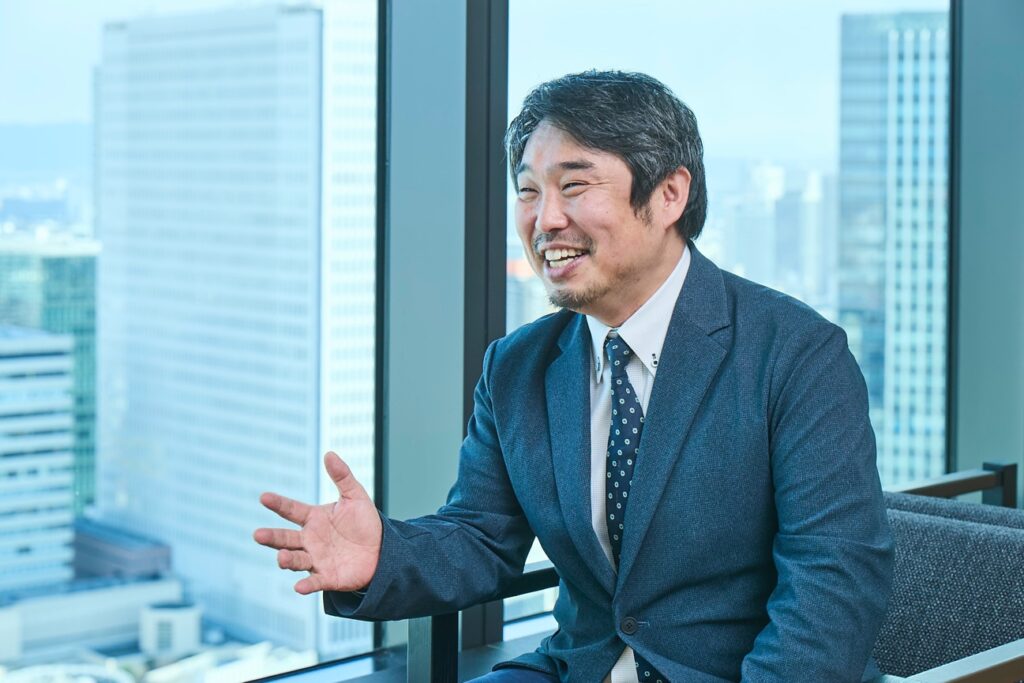
): In my case, it was triggered by my mother developing dementia. I was 40 at the time, and I realized that the only way I could work while caring for my mother was to start my own company. Since I had previously been developing simulators for the railway industry, I wondered if I could use that technology to create something useful for people with dementia and care facilities.
That’s how we developed “TANO,” a gamification technology for welfare, caregiving, and educational settings that utilizes motion sensors.
When we first started development, we were focused solely on dementia, but as we became more involved in the caregiving field, we realized there were many other people facing various challenges, such as those with disabilities and children with illnesses. For example, with our technology, we could create a system that allows children who have difficulty moving their bodies to play together happily.I began to see the potential that CYBERDYNE could make this a reality using technology that harnesses bioelectric signals.
Yoshihiro Yasunaga
(hereinafter Yasunaga
): In my previous job, I worked in Kitakata City, Fukushima Prefecture. Even back then, Kitakata had an aging population rate of nearly 30%, and I was concerned about how the younger generation would be able to shoulder the burden of social security in the future…It was around that time that I learned about “HAL®” on TV. It dawned on me that this could create an environment where the elderly could continue working longer, and I decided to join CYBERDYNE in 2008.
At the time, CYBERDYNE was preparing for an IPO, and since I held a U.S. Certified Public Accountant (CPA) license, I started out in charge of IPO preparations and fundraising.Later, I took on sales responsibilities and also served as the representative of the RoboCare Center Group—HAL’s training facilities—becoming deeply involved in its broader expansion. Through my work on the front lines interacting with users, I developed a desire to engage more deeply in the fields of medicine and nursing care, which led me to earn a Ph.D. in Medicine. Seventeen years ago, I never imagined I would become so deeply immersed in this industry, but that’s how rewarding I find it.
From competition to value creation through collaboration
——I understand you two have known each other for eight years. How did you first meet?
Mitamura
: It all started when we exhibited at the “Shonan Hiratsuka Techno Fair” in 2013. CYBERDYNE was exhibiting right across from us at the venue. There, I saw the company’s representative, Professor Yoshiyuki Sankai, speaking on equal terms with Yuji Kuroiwa, the Governor of Kanagawa Prefecture.Of course, Professor Yamakai is a leading figure who established cybernics (Note 1) and pioneered the potential of care technology in Japan, so I looked up to him. At the time, it had only been about six months since we developed TANO, and I watched him thinking, “I hope one day I can be in a position where I can talk to the governor myself.” Later, we had the opportunity to exhibit at CYBERDYNE’s Roboterra in Fujisawa, and that’s how our connection began.
Yasunaga
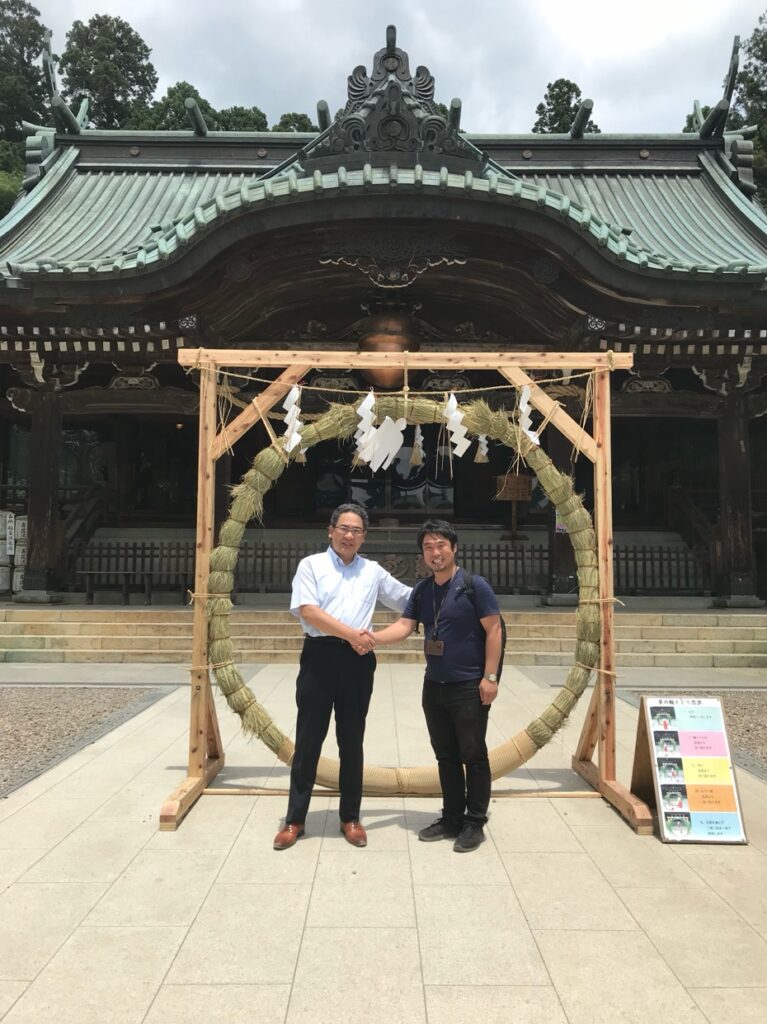
: There was one time when Mr. Mitamura came all the way to Tsukuba to meet Professor Yamakai. It was my first time meeting him, and since we had a little time before our scheduled meeting, we climbed Mount Tsukuba together.Even though Mr. Mitamura was wearing a suit (laughs). But as we talked about various things while hiking, I realized that TANO and HAL are highly compatible when used together. What we had in common, in particular, was the desire to bring joy to people who have been living with illness or disabilities for a long time.
Mitamura
: I’ll never forget that hike. Everyone we passed gave us strange looks (laughs). But I used the footage I shot then to create new content for TANO right on the spot.
Yasunaga
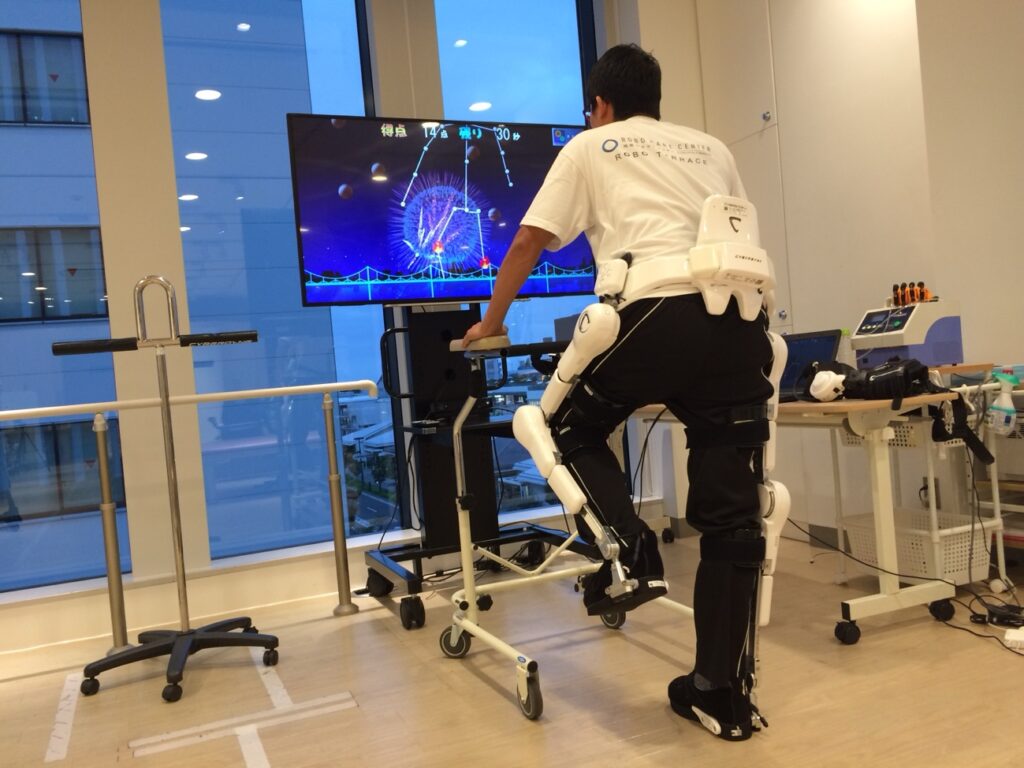
: Mitamura is the kind of person who never wastes an experience. As a result, TANO is now being used at 18 RoboCare Centers across the country.By combining functional training with HAL and exercise programs with TANO, we’ve created an environment where users can continue their rehabilitation while having fun.
One particularly interesting initiative is the online matches using TANO between the RoboCare Centers in Tsukuba, Osaka, and Kobe. Even people who usually use wheelchairs move their bodies with all their might during these matches. The staff are even surprised, asking, “Can they really move that much?” The high level of affinity I felt back then has been proven.
(Note 1) Cybotics:
A comprehensive academic field that integrates and combines various academic disciplines—including neuroscience, exercise physiology, robotics, IT, regenerative medicine, behavioral science, ethics, safety, psychology, and the social sciences—with cybernetics, mechatronics, and informatics at its core. It is a new academic field established by Professor Yamakai, and HAL was developed using this technology.
Aiming to develop Japanese care technology that meets global demand
——Both companies are actively pursuing overseas expansion. Could you tell us about your current initiatives?
Yasunaga
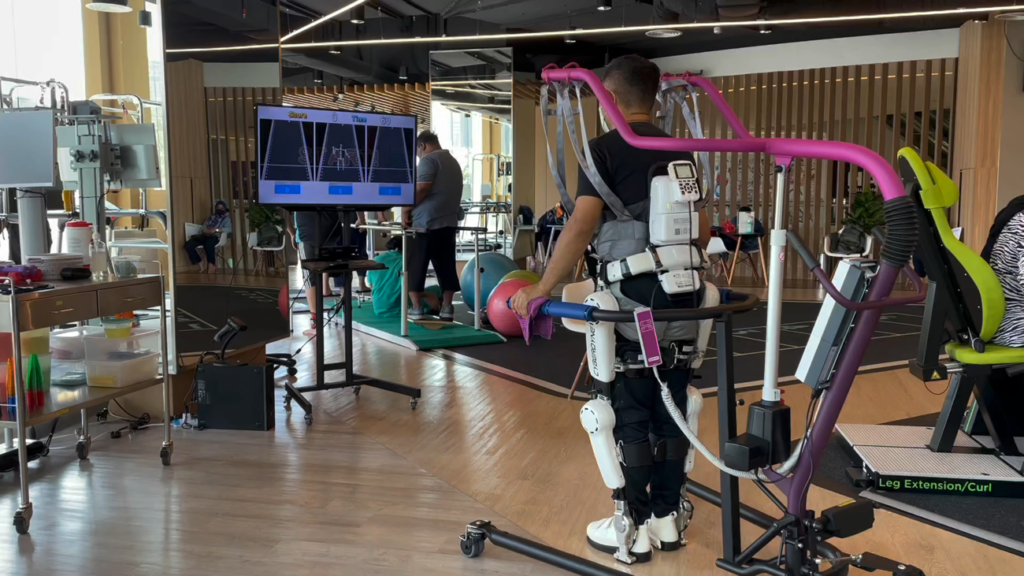
: As for recent developments, our expansion in Malaysia is going particularly well. With the support of the Malaysian government, we have successfully introduced HAL into a 700-bed facility, along with TANO. Malaysia was the first country in the ASEAN region to adopt HAL, and it is also a country that is putting significant effort into this field, as evidenced by the establishment of a “Neurorobotics Rehabilitation and Cybernics Center.
”What’s interesting is that Malaysian government officials are introducing our products to other ASEAN countries. For example, officials from Malaysian ministries have even attended meetings with the health ministries of Indonesia and India. While this kind of thing is quite difficult to achieve in Japan, I’m surprised to see that overseas, once the value of our technology is recognized, we receive such active support.
Mitamura
: We began our full-scale overseas expansion in 2018. Until then, our focus had been on the domestic market, but we received a lot of requests from international visitors at trade shows in Japan saying, “We want this.” In Japan, there’s a strong tendency to adopt “TANO” only after government subsidies are approved, but overseas, companies make the decision to adopt a product immediately if they see its value.
In Hong Kong, in particular, the system aligned well with local funding programs, so the rollout proceeded smoothly.On the other hand, selecting distributors proved to be a major hurdle in our overseas expansion. For example, in China, conflicts arose between distributors, and in Taiwan, we discovered that a company that had initially been our partner was reselling demo units at inflated prices. However, I believe that even these experiences have helped us accumulate valuable know-how for our global expansion.
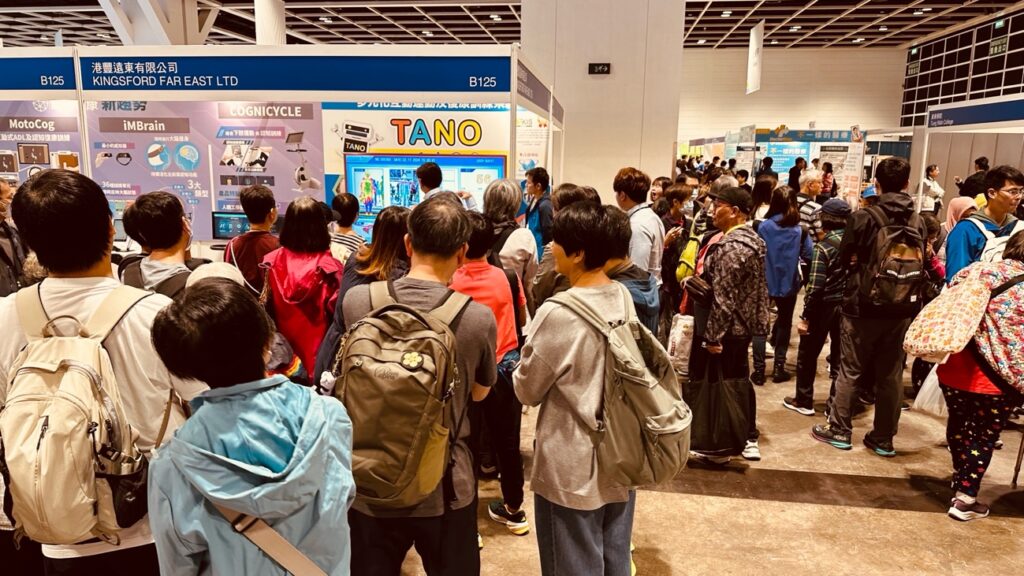
As for Malaysia, thanks to CYBERDYNE’s efforts, we’ve seen some unexpected developments, such as Mr. Yasunaga introducing TANO to local ministers. I haven’t been to Malaysia myself yet, but receiving this kind of information and these opportunities is truly invaluable for a small business like ours.
Yasunaga
: “I introduced you,” he’d say, and then send photos later (laughs).
Mitamura
: I truly appreciate that companies like CYBERDYNE are leading the way in this industry in Japan and pulling companies like ours along with them. The field of care technology still has a limited number of entrants, and since its history is relatively short, there is almost no standard data available. That is precisely why I feel it is important to unite where we can cooperate and share knowledge, and to work together to raise the overall level of technical capability.
Yasunaga
: Of course, things can get complicated when we become competitors, but since no single company can develop all the necessary technologies on its own, it’s beneficial for us to collaborate on areas where we have strong synergy—like TANO—to pioneer new solutions together.
—
—Finally, could you offer some advice for up-and-coming companies?
Mitamura
:First, since the International Welfare Equipment Exhibition is the largest trade show in Asia, I recommend testing your global capabilities there. Also, please visit trade shows in Beijing, South Korea, and Hong Kong. If you only look at Japanese trade shows, you’ll lose sight of global trends.
Another key point is collaboration with educational institutions. We commission students to develop games, and through this process, they naturally learn about the physical movements and cognitive functions of older adults. It’s a bit embarrassing to admit, but I didn’t truly understand what dementia was until my own mother was diagnosed with it.
At the time, I regretted not having confronted this issue sooner.However, the challenge is that many people only come to understand these issues once they become personally involved or when they become a problem close to home. For example, realizing something only after becoming a caregiver for a family member, or realizing it only after having a child… sometimes that’s too late. Social issues aren’t limited to the elderly, and I believe that if we could naturally recognize the existence of various problems and possibilities at an earlier stage, both society and the solutions we arrive at would change.
Yasunaga
: Based on our experience, it’s crucial to find reliable overseas partners while still based in Japan. From there, we build networks overseas, including connections with embassies. The smaller the company, the more important such networks become.
Japan lacks natural resources like oil. That’s precisely why there’s great significance in creating technologies that the world needs. As Yamami says, “Technology that makes people think, ‘We’re glad Japan exists.’” We intend to continue our development with that goal in mind.
Aging, in particular, is not just a problem for Japan.Countries across Asia—including Taiwan, South Korea, Singapore, and China—are facing similar challenges. That is precisely why Japanese care technology holds such great potential. What matters most is not insisting on developing and deploying solutions alone, but rather adopting an attitude of tackling social issues through collaboration with various companies and organizations.
Tsutomu Mitamura,
Representative Director, TANOTECH Co., Ltd.
He began programming in 1982 and submitted short programs to computer magazines. Since 1999, he has developed numerous systems designed for enjoyable learning, such as 3D simulators. In 2012, inspired by caring for his mother, he founded Lucky Soft Co., Ltd. In 2018, he established TANOTECH Co., Ltd. to specialize in TANO. He continues to evolve the product through repeated field testing in care settings.
Dr. Yoshihiro Yasunaga (M.D.)
Specially Appointed Executive Officer and Head of Sales Division, CYBERDYNE Co., Ltd.
Representative Director, Shonan/Oita/Suzuka RoboCare Center Co., Ltd.
Visiting Researcher, Department of Geriatrics, The University of Tokyo
Hospital Part-time Lecturer, School of Human Sciences, Waseda University
Part-time Lecturer, Department of Rehabilitation Medicine, Fukushima Medical University
Certified Public Accountant (CPA)/Certified Management Accountant (CMA)
Born in 1974.Graduated from the Department of Business Administration, Faculty of Economics, Dokkyo University. After working at Tyco Healthcare Japan and ON Semiconductor Technology, he joined CYBERDYNE in 2008. After overseeing preparations for the company’s IPO, he transferred to the sales department. Completed a master’s program at the Open University of Japan in 2015. Since 2019, he has been pursuing a degree in Disease Control Medicine at the Graduate School of Comprehensive Human Sciences, University of Tsukuba. Assumed his current position in January 2024.