
- Transfer Assistance (Non-wearable)
- Commercialized (Available)
パナソニック エイジフリー株式会社
Rishone Plus Bed-to-Floor Transfer Robot
Features
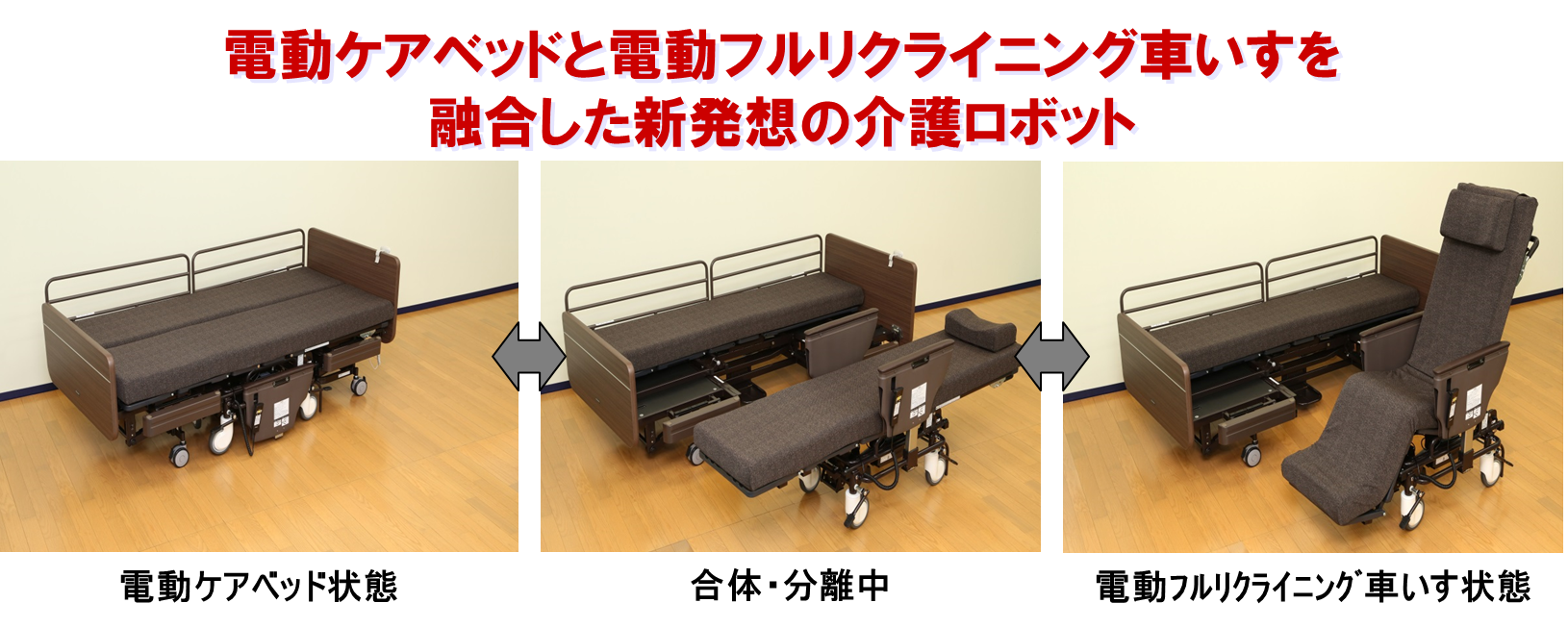
The "Rishone Plus" bed-to-wheelchair transfer assist robot is a new-concept care robot that combines an electric care bed with an assistive electric full-reclining wheelchair, enabling a single caregiver to provide simple, safe, and smooth transfer assistance. It can be used as a standard
electric care bed with three motors (backrest, leg rest, and height adjustment).In addition, half of the bed is designed to detach and function as a fully reclining electric wheelchair. This allows a single caregiver to safely and easily assist bedridden individuals requiring a high level of care in transferring between the bed and wheelchair—or getting out of bed—without lifting them, while keeping the patient in a lying position.
Furthermore, it has obtained certification based on the international safety standard for life support robots, ISO 13482. Since it ensures the safety required of care robots, you can use it with peace of mind.
Primary Target Audience
Rishone Plus is a care robot designed to assist bedridden individuals requiring a high level of care in getting out of bed and participating in meals and activities in communal areas. It is intended for individuals who have given up on getting out of bed due to physical risks (such as osteoporosis, subcutaneous hemorrhage, skin breakdown, or tube feeding), as well as those for whom getting out of bed comfortably can increase opportunities for participation and is expected to improve their quality of life.
Benefits of Implementation
The introduction of Rishone Plus is expected to yield the following primary benefits:
(1) Improved Quality of Life (QOL) —
It allows for the transfer of bedridden individuals requiring a high level of care while they remain in a comfortable lying position, thereby reducing pain and physical and psychological strain during the transfer process. This increases opportunities for them to get out of bed, encourages participation in meals and activities in communal areas, and helps maintain a more vibrant lifestyle.
(2) Improved Working Environment:
Tasks that previously required two to three caregivers to lift and transfer individuals requiring a high level of care can now be performed by a single caregiver without lifting. This helps reduce the physical burden on caregivers (including the risk of lower back pain during transfers, which is the most common cause of workplace injuries), alleviate psychological stress, and minimize the risk of falls during transfers.
*Please refer to the URL below for details.
http://sumai.panasonic.jp/agefree/products/resyoneplus
| Names of robotic care devices | Bed-to-Chair Transfer Assist Robot: Rishone Plus |
|---|---|
| Company Name |
Panasonic Age-Free Co., Ltd.
https://panasonic.co.jp/ls/paf/ |
| Key Area | Transfer Assistance Devices (Non-Wearable Type) |
| Target Users | Individuals who have given up on getting out of bed due to physical risks (such as osteoporosis, subcutaneous hemorrhage, skin abrasions, or tube feeding) that make transferring difficult, as well as those for whom getting out of bed comfortably is expected to increase opportunities for participation and improve their quality of life |
| Intended Usage Environment | Care facilities, home |
| Release Date | Sales began on January 20, 2017; rentals began sequentially starting February 1, 2017 |
| Contact Department | Care Products Division, Sales Planning Department |
| Inquiry URL |
Please contact us via the URL below. https://sumai.panasonic.jp/agefree/ |
| Contact Phone Number | 06-6908-8141 |